
Free story · Arabic Readers Level 1 · Book 1
Do You Believe the Donkey? — the full story in Arabic and English
A complete Level 1 story for older children (about 10+), teens and adults learning Arabic: six short scenes, each in fully vowelled Arabic and then in English. Read it here, then sign in free to hear both languages word by word.
Last reviewed:
Hear the whole story, word by word — free
Listen to a sample
The story
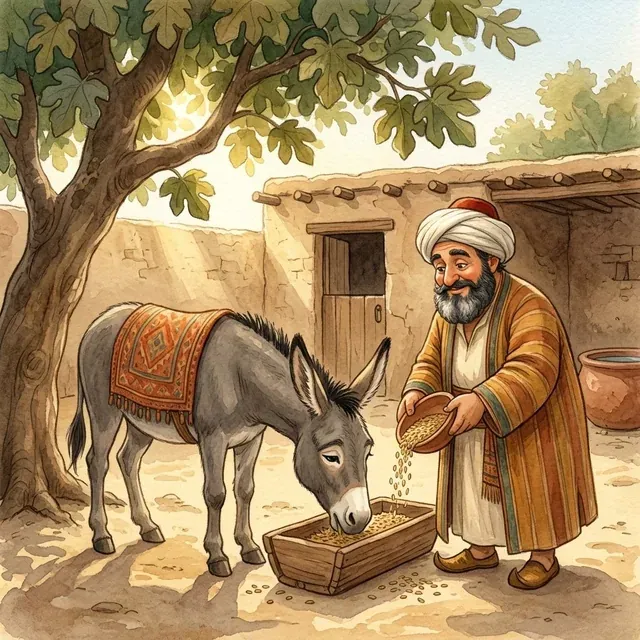
صَباحٌ هادِئٌ
فِي صَبَاحِ يَوْمٍ جَمِيلٍ، خَرَجَ جُحَا إِلَى سَاحَةِ بَيْتِهِ الصَّغِيرَةِ. كَانَتِ الشَّمْسُ دَافِئَةً، وَكَانَتْ شَجَرَةُ التِّينِ تُعْطِي ظِلًّا لَطِيفًا عَلَى الْأَرْضِ. وَتَحْتَ الشَّجَرَةِ وَقَفَ حِمَارُهُ الرَّمَادِيُّ، يَنْظُرُ إِلَيْهِ بِعَيْنَيْنِ مُتْعَبَتَيْنِ.
أَمْسِ حَمَلَ الْحِمَارُ الْحَطَبَ مِنَ الْجَبَلِ إِلَى السُّوقِ، وَمَشَى طَرِيقًا طَوِيلًا تَحْتَ الشَّمْسِ. لِذَلِكَ كَانَتْ أَرْجُلُهُ تُؤْلِمُهُ، وَكَانَ ظَهْرُهُ مُتْعَبًا، وَلَمْ يَأْكُلْ عَشَاءَهُ كُلَّهُ.
كَانَ جُحَا رَجُلًا طَيِّبَ الْقَلْبِ، لَا يُحِبُّ أَنْ يَرَى حَيَوَانًا يَتْعَبُ. مَسَحَ رَأْسَ الْحِمَارِ بِيَدِهِ، وَقَالَ لَهُ بِصَوْتٍ هَادِئٍ: «اَلْيَوْمَ يَوْمُ رَاحَةٍ يَا صَدِيقِي. لَنْ تَحْمِلَ شَيْئًا، وَلَنْ تَمْشِيَ إِلَى أَيِّ مَكَانٍ».
ثُمَّ وَضَعَ أَمَامَهُ الشَّعِيرَ وَالْمَاءَ الصَّافِيَ. أَكَلَ الْحِمَارُ بِسُرُورٍ، وَحَرَّكَ أُذُنَيْهِ الطَّوِيلَتَيْنِ كَأَنَّهُ يَقُولُ: شُكْرًا يَا جُحَا.
جَلَسَ جُحَا عَلَى حَجَرٍ قَرِيبٍ وَابْتَسَمَ، وَقَالَ فِي نَفْسِهِ: «يَوْمٌ هَادِئٌ لِي وَلِحِمَارِي».
A Quiet Morning
One fine morning, Juha stepped out into the small courtyard of his house. The sun was warm, and the fig tree threw a gentle shade on the ground. Under the tree stood his grey donkey, looking at him with tired eyes.
Yesterday the donkey had carried firewood from the mountain to the market and walked a long way in the sun. So his legs hurt, his back was tired, and he had not finished his supper.
Juha was a kind-hearted man who hated to see an animal worn out. He stroked the donkey's head and said to him quietly, "Today is a day of rest, my friend. You won't carry anything, and you won't walk anywhere."
Then he set barley and clear water in front of him. The donkey ate happily and twitched his long ears, as if to say, "Thank you, Juha."
Juha sat down on a stone nearby, smiled and said to himself, "A quiet day for me and my donkey."
كِذْبَةٌ صَغيرَةٌ
بَعْدَ قَلِيلٍ، سَمِعَ جُحَا طَرْقًا عَلَى الْبَابِ. فَتَحَ الْبَابَ، فَرَأَى جَارَهُ أَبَا الْخَيْرِ. كَانَ الْجَارُ يَحْمِلُ كَيْسًا كَبِيرًا مِنَ الْقَمْحِ، وَكَانَ يَبْتَسِمُ كَالْعَادَةِ.
قَالَ أَبُو الْخَيْرِ: «صَبَاحُ الْخَيْرِ يَا جُحَا. أُرِيدُ أَنْ أَطْحَنَ هَذَا الْقَمْحَ فِي الطَّاحُونَةِ، وَالطَّرِيقُ إِلَيْهَا طَوِيلٌ. هَلْ تُعِيرُنِي حِمَارَكَ الْيَوْمَ؟».
سَكَتَ جُحَا لَحْظَةً. كَانَ يَعْرِفُ جَارَهُ جَيِّدًا: رَجُلٌ طَيِّبٌ، لَكِنَّهُ يَسْتَعْجِلُ دَائِمًا، وَيَحْمِلُ عَلَى الْحِمَارِ أَكْثَرَ مِمَّا يَسْتَطِيعُ أَنْ يَحْمِلَ، وَلَا يَرْجِعُهُ إِلَّا فِي اللَّيْلِ.
لَمْ يُرِدْ جُحَا أَنْ يُعْطِيَهُ الْحِمَارَ الْمُتْعَبَ. لَكِنَّهُ خَجِلَ أَنْ يَقُولَ لَهُ: لَا. فَحَكَّ لِحْيَتَهُ، وَقَالَ بِوَجْهٍ حَزِينٍ: «آهٍ يَا أَبَا الْخَيْرِ، مَا أَسْوَأَ حَظَّكَ الْيَوْمَ! الْحِمَارُ لَيْسَ هُنَا. أَخَذَهُ ابْنِي صَابِرٌ إِلَى قَرْيَةِ عَمِّهِ، وَلَنْ يَرْجِعَ قَبْلَ الْمَسَاءِ».
A Small Lie
A little later, Juha heard a knock at the door. He opened it and saw his neighbour, Abu al-Khair. The neighbour was carrying a big sack of wheat, and he was smiling as usual.
Abu al-Khair said, "Good morning, Juha. I want to grind this wheat at the mill, and the road there is long. Will you lend me your donkey today?"
Juha was silent for a moment. He knew his neighbour well: a good man, but always in a hurry, who loaded a donkey with more than it could carry and never brought it back before night.
Juha did not want to give him the tired donkey. But he felt too shy to tell him no. So he scratched his beard and said with a sad face, "Oh, Abu al-Khair, what bad luck you have today! The donkey isn't here. My son Saber took him to his uncle's village, and he won't be back before evening."
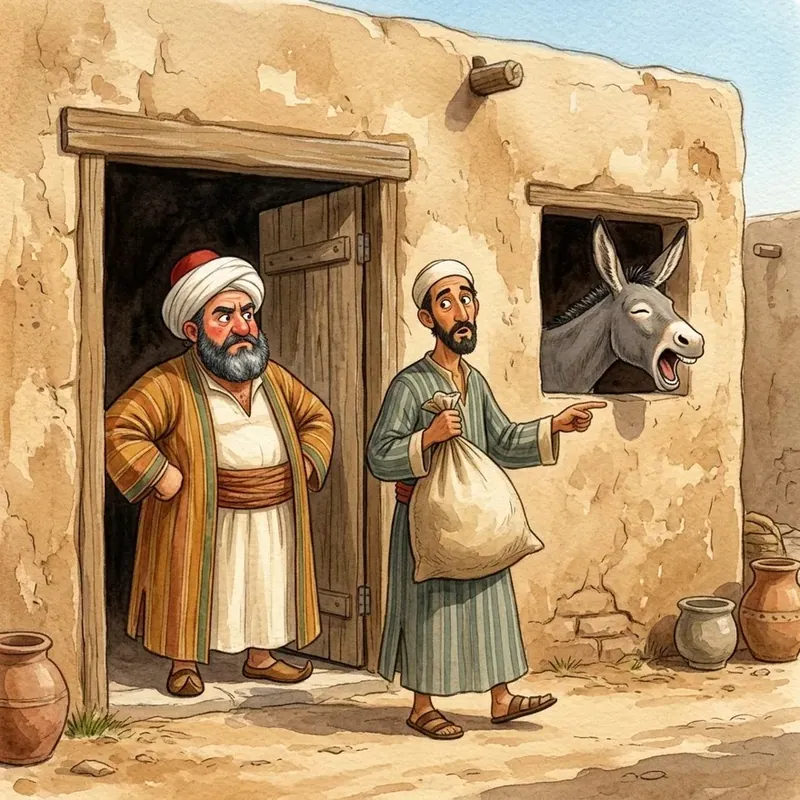
صَوْتٌ مِنَ الإِسْطَبْلِ
حَزِنَ أَبُو الْخَيْرِ، وَرَفَعَ كِيسَ الْقَمْحِ عَلَى كَتِفِهِ. قَالَ: «لَا بَأْسَ يَا جُحَا، سَأَحْمِلُهُ بِنَفْسِي». ثُمَّ اسْتَدَارَ لِيَمْشِيَ.
وَفِي تِلْكَ اللَّحْظَةِ، جَاءَ مِنْ دَاخِلِ الْبَيْتِ صَوْتٌ عَالٍ: «هَاااءْ! هَاااءْ! هَاااءْ!». كَانَ الْحِمَارُ يَنْهَقُ بِكُلِّ قُوَّتِهِ، كَأَنَّهُ يُرِيدُ أَنْ يَقُولَ: أَنَا هُنَا! حَتَّى الدَّجَاجُ فِي الْحَارَةِ هَرَبَ مِنْ شِدَّةِ الصَّوْتِ.
تَوَقَّفَ الْجَارُ وَنَظَرَ إِلَى جُحَا. ثُمَّ نَظَرَ إِلَى الْإِسْطَبْلِ، ثُمَّ نَظَرَ إِلَى جُحَا مَرَّةً أُخْرَى. رَفَعَ حَاجِبَيْهِ وَقَالَ: «يَا جُحَا! أَلَيْسَ هَذَا صَوْتُ حِمَارِكَ؟ أَنَا أَسْمَعُهُ بِأُذُنَيَّ! الْحِمَارُ فِي الْبَيْتِ، لَا فِي قَرْيَةِ عَمِّ صَابِرٍ!».
اِحْمَرَّ وَجْهُ جُحَا قَلِيلًا، لَكِنَّهُ لَمْ يَرْتَبِكْ طَوِيلًا. أَخَذَ نَفَسًا عَمِيقًا، وَوَقَفَ مُسْتَقِيمًا، وَوَضَعَ يَدَيْهِ عَلَى خَصْرِهِ، وَنَظَرَ إِلَى جَارِهِ نَظْرَةً جَادَّةً جِدًّا، كَأَنَّ جَارَهُ هُوَ الَّذِي أَخْطَأَ.
A Voice from the Stable
Abu al-Khair was disappointed, and he lifted the sack of wheat onto his shoulder. "Never mind, Juha," he said. "I'll carry it myself." Then he turned to go.
At that very moment, a loud sound came from inside the house: "Hee-haw! Hee-haw! Hee-haw!" The donkey was braying with all his strength, as if he wanted to say, "I'm here!" Even the hens in the lane ran off at the noise.
The neighbour stopped and looked at Juha. Then he looked at the stable, and then at Juha again. He raised his eyebrows and said, "Juha! Isn't that your donkey's voice? I can hear him with my own ears! The donkey is at home, not in Saber's uncle's village!"
Juha's face turned a little red, but he did not stay flustered for long. He took a deep breath, stood up straight, put his hands on his hips, and gave his neighbour a very serious look, as if the neighbour were the one who had done wrong.
مَنْ تُصَدِّقُ؟
قَالَ جُحَا بِصَوْتٍ غَاضِبٍ قَلِيلًا: «عَجِيبٌ أَمْرُكَ يَا أَبَا الْخَيْرِ! أَنْتَ تَعْرِفُنِي مُنْذُ عِشْرِينَ سَنَةً. وَانْظُرْ إِلَى لِحْيَتِي، فِيهَا شَعْرٌ أَبْيَضُ كَثِيرٌ، وَصَاحِبُ اللِّحْيَةِ الْبَيْضَاءِ لَا يَكْذِبُ. وَمَعَ ذَلِكَ تُصَدِّقُ الْحِمَارَ وَلَا تُصَدِّقُنِي؟».
فَتَحَ الْجَارُ فَمَهُ، ثُمَّ أَغْلَقَهُ. لَمْ يَعْرِفْ مَاذَا يَقُولُ. ثُمَّ انْفَجَرَ ضَاحِكًا، حَتَّى سَقَطَ كِيسُ الْقَمْحِ مِنْ كَتِفِهِ.
قَالَ: «وَاللَّهِ يَا جُحَا، مَا رَأَيْتُ رَجُلًا مِثْلَكَ! الْحِمَارُ يَقُولُ الْحَقِيقَةَ، وَأَنْتَ تُرِيدُ أَنْ أُصَدِّقَكَ أَنْتَ!».
قَالَ جُحَا: «الْحِمَارُ حَيَوَانٌ، وَالْحَيَوَانُ لَا يَفْهَمُ. وَمُنْذُ مَتَى يَعْرِفُ الْحِمَارُ الصِّدْقَ مِنَ الْكَذِبِ؟».
وَفِي تِلْكَ اللَّحْظَةِ، نَهَقَ الْحِمَارُ مَرَّةً أُخْرَى، أَعْلَى مِنَ الْمَرَّةِ الْأُولَى. فَضَحِكَ الْجَارُ أَكْثَرَ، وَخَرَجَ الْجِيرَانُ مِنْ أَبْوَابِهِمْ يَنْظُرُونَ: مَاذَا يَحْدُثُ عِنْدَ بَيْتِ جُحَا؟
Whom Do You Believe?
Juha said in a slightly angry voice, "What a strange man you are, Abu al-Khair! You've known me for twenty years. And look at my beard: there's plenty of white hair in it, and a man with a white beard doesn't lie. And still you believe the donkey and not me?"
The neighbour opened his mouth, then closed it. He didn't know what to say. Then he burst out laughing, until the sack of wheat fell off his shoulder.
He said, "By God, Juha, I've never seen a man like you! The donkey tells the truth, and you want me to believe you!"
Juha said, "The donkey is an animal, and animals don't understand. Since when does a donkey know truth from lies?"
At that very moment the donkey brayed again, louder than the first time. The neighbour laughed even harder, and the neighbours came out of their doors to look: what was happening at Juha's house?
الحَقيقَةُ
نَظَرَ جُحَا إِلَى الْجِيرَانِ، ثُمَّ إِلَى جَارِهِ الَّذِي يَضْحَكُ، ثُمَّ إِلَى الْإِسْطَبْلِ. وَفَجْأَةً ضَحِكَ هُوَ أَيْضًا، وَقَالَ: «غَلَبَنِي الْحِمَارُ يَا أَبَا الْخَيْرِ. نَعَمْ، الْحِمَارُ هُنَا، وَأَنَا كَذَبْتُ عَلَيْكَ».
ثُمَّ قَالَ بِصِدْقٍ: «لَمْ أَكْذِبْ لِأَنِّي بَخِيلٌ. الْحِمَارُ مُتْعَبٌ مِنْ حَمْلِ الْأَمْسِ، وَأَنْتَ تَسْتَعْجِلُ دَائِمًا، وَتَحْمِلُهُ فَوْقَ طَاقَتِهِ، وَتُرْجِعُهُ فِي اللَّيْلِ جَائِعًا. خَجِلْتُ أَنْ أَقُولَ لَكَ هَذَا، فَقُلْتُ كَذْبَةً صَغِيرَةً، فَسَمِعَهَا كُلُّ الْحَيِّ».
سَكَتَ أَبُو الْخَيْرِ، وَنَظَرَ إِلَى الْأَرْضِ. عَرَفَ أَنَّ هَذَا الْكَلَامَ صَحِيحٌ، وَشَعَرَ بِالْخَجَلِ مِنْ نَفْسِهِ. ثُمَّ رَفَعَ رَأْسَهُ وَقَالَ: «مَعَكَ حَقٌّ يَا جُحَا. أَعِدُكَ أَنْ أُعَامِلَهُ بِلُطْفٍ، وَأَنْ أَمْشِيَ بِبُطْءٍ، وَأَنْ أُعِيدَهُ قَبْلَ غُرُوبِ الشَّمْسِ».
قَالَ جُحَا: «الْحِمَارُ اسْتَرَاحَ كُلَّ الصَّبَاحِ. خُذْهُ، لَكِنْ ضَعْ عَلَيْهِ نِصْفَ الْقَمْحِ فَقَطْ، وَاحْمِلِ النِّصْفَ الْآخَرَ عَلَى كَتِفِكَ». وَافَقَ الْجَارُ ضَاحِكًا. فَأَعْطَاهُ جُحَا الْحِمَارَ، وَمَعَهُ كِيسٌ صَغِيرٌ مِنَ الشَّعِيرِ، وَقَالَ: «هَذَا غَدَاؤُهُ، فَلَا تَنْسَهُ».
The Truth
Juha looked at the neighbours, then at his laughing neighbour, then at the stable. Suddenly he laughed too and said, "The donkey has beaten me, Abu al-Khair. Yes, the donkey is here, and I lied to you."
Then he said honestly, "I didn't lie because I'm stingy. The donkey is tired from yesterday's load, and you're always in a hurry: you load him beyond his strength and bring him back hungry at night. I was too shy to tell you this, so I told a small lie — and the whole neighbourhood heard it."
Abu al-Khair fell silent and looked at the ground. He knew these words were true, and he felt ashamed of himself. Then he raised his head and said, "You're right, Juha. I promise to be gentle with him, to walk slowly, and to bring him back before sunset."
Juha said, "The donkey has rested all morning. Take him — but put only half the wheat on him, and carry the other half on your own shoulder." The neighbour laughed and agreed. So Juha gave him the donkey, with a small bag of barley, and said, "This is his lunch, so don't forget it."
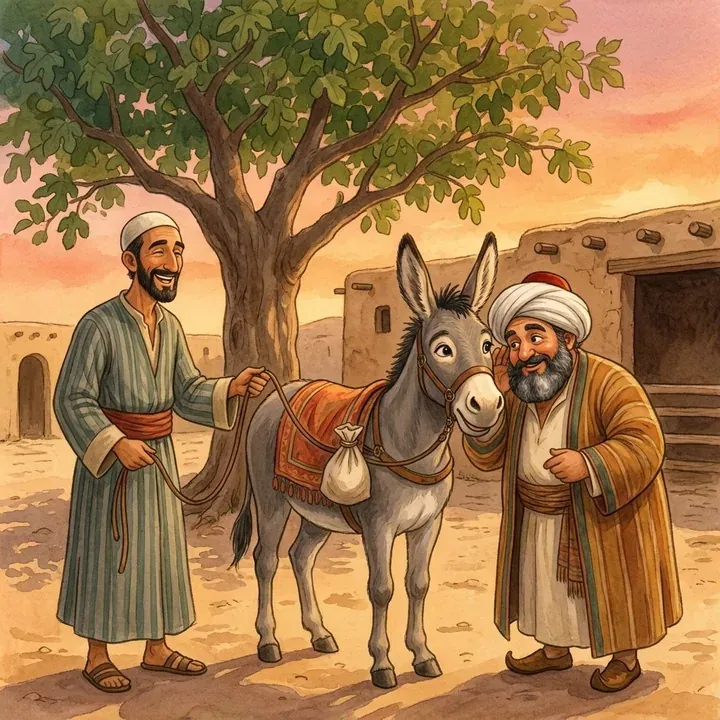
قَبْلَ الغُروبِ
وَقَبْلَ غُرُوبِ الشَّمْسِ بِقَلِيلٍ، رَجَعَ أَبُو الْخَيْرِ. كَانَ الْحِمَارُ شَبْعَانَ، يَمْشِي بِخُطُوَاتٍ مَرِحَةٍ، وَلَا يَبْدُو عَلَيْهِ التَّعَبُ. وَكَانَ الْجَارُ قَدْ سَقَاهُ مَاءً بَارِدًا فِي الطَّرِيقِ، وَأَعْطَاهُ غَدَاءَهُ كَامِلًا.
قَالَ الْجَارُ: «هَذَا حِمَارُكَ يَا جُحَا، سَلِيمًا كَمَا أَخَذْتُهُ. حَمَلَ نِصْفَ الْقَمْحِ، وَحَمَلْتُ أَنَا النِّصْفَ الْآخَرَ، وَمَشَيْنَا بِبُطْءٍ».
مَالَ جُحَا إِلَى أُذُنِ الْحِمَارِ، كَأَنَّهُ يَسْمَعُ مِنْهُ شَيْئًا. ثُمَّ قَالَ: «الْحِمَارُ يَقُولُ: أَهْلًا بِهَذَا الْجَارِ فِي كُلِّ يَوْمٍ!».
ضَحِكَ الْجَارَانِ مَعًا تَحْتَ شَجَرَةِ التِّينِ. ثُمَّ قَالَ أَبُو الْخَيْرِ: «يَا جُحَا، لَوْ قُلْتَ لِي الْحَقِيقَةَ مِنَ الْبِدَايَةِ، لَوَفَّرْتَ عَلَى نَفْسِكَ كُلَّ هَذَا الْخَجَلِ».
قَالَ جُحَا: «صَدَقْتَ. الْكَذْبَةُ الصَّغِيرَةُ يَسْمَعُهَا الْجَمِيعُ، حَتَّى مِنْ دَاخِلِ الْإِسْطَبْلِ. أَمَّا الْحَقِيقَةُ، فَتُقَالُ مَرَّةً وَاحِدَةً، وَتَنْتَهِي». وَنَظَرَ الْحِمَارُ إِلَيْهِمَا رَاضِيًا، كَأَنَّهُ فَهِمَ كُلَّ كَلِمَةٍ.
Before Sunset
A little before sunset, Abu al-Khair came back. The donkey was full, walking with cheerful steps and showing no sign of tiredness. The neighbour had given him cool water on the way and fed him his whole lunch.
The neighbour said, "Here is your donkey, Juha, safe and sound, just as I took him. He carried half the wheat, I carried the other half, and we walked slowly."
Juha leaned toward the donkey's ear, as if he were listening to something. Then he said, "The donkey says: this neighbour is welcome any day!"
The two neighbours laughed together under the fig tree. Then Abu al-Khair said, "Juha, if you had told me the truth from the start, you would have spared yourself all this embarrassment."
Juha said, "You're right. Everyone hears a small lie, even from inside the stable. But the truth is said once, and then it's over." And the donkey watched them contentedly, as if he had understood every word.
Hear the whole story, word by word — free
The story in brief
Juha's donkey is tired, and Juha has decided it will rest today. So when his neighbour knocks to borrow it, Juha — too shy to say no — claims the donkey has gone to another village. At that very moment the donkey brays from the stable. Juha's answer is one of the most famous lines in Arabic humour: "You believe a donkey rather than me, a man with a grey beard?" With the whole lane laughing, Juha finally tells the truth — and it works far better than the lie.
The lesson: A small lie is heard by everyone — say the truth kindly from the start.
Ten key words
| Arabic | Say it | Meaning |
|---|---|---|
| حِمار | ḥimār | donkey |
| جار | jār | neighbour |
| أَعارَ – يُعِيرُ | aʿāra – yuʿīru | to lend |
| طاحُونَة | ṭāḥūna | mill (for grinding grain) |
| قَمْح | qamḥ | wheat |
| شَعِير | shaʿīr | barley (animal feed) |
| نَهَقَ – يَنْهَقُ | nahaqa – yanhaqu | to bray (a donkey's call) |
| إِسْطَبْل | isṭabl | stable (a house for animals) |
| لِحْيَة | liḥya | beard |
| صَدَّقَ – يُصَدِّقُ | ṣaddaqa – yuṣaddiqu | to believe (someone) |
Three questions to talk about
- Why didn't Juha tell his neighbour the truth at the start?
- What changed when Juha finally said what really worried him?
- Have you ever told a small lie to avoid saying no? What could you say instead?
More stories like this
Arabic Readers Level 1 has 14 more classic tales told the same way: Arabic first, then English, both read aloud. All 15 books of Arabic Readers Level 1 — $34.99.