
Fanous · Arabic stories for children
Arabic stories with tashkeel (harakat) on every word
For children aged 4–7 and for anyone learning to read Arabic: stories with full tashkeel on every word. The child listens while each word lights up, then reads the page alone. Book 1 of each series is free.
Last reviewed:
Most of the Arabic a child sees every day, on signs, screens and in grown-up books, is written without the short vowel marks. An adult fills them in from experience. A new reader cannot, so they guess, get it wrong and lose heart. A story with tashkeel removes the guessing: the marks are on the page, and a child who knows the letters and the marks can sound out a word they have never met before.
What full tashkeel means in a story
Tashkeel (also called harakat) is the set of small marks above and below the letters: fatha, damma, kasra, sukun, shadda and the doubled endings. They tell the reader which short vowel to say. Without them, the three letters كتب could be كَتَبَ (he wrote) or كُتُب (books).
Many children's books mark only the difficult words. In Fanous every word in every book carries its marks, from the first page to the last, in simple Modern Standard Arabic. That matters for a beginner, because the easy words are exactly the ones they are still learning.
Each page is also read aloud by a clear Arabic voice, and each word lights up as it is spoken. The child sees the marks and hears what they sound like in the same moment. Tapping any word plays it again.
Two free stories to start with
Book 1 of each series is free once you sign in with an email. You can also read the full text of Juha, His Son, and the Donkey right now and see what a fully vowelled page looks like.
-
Free
 Book 1
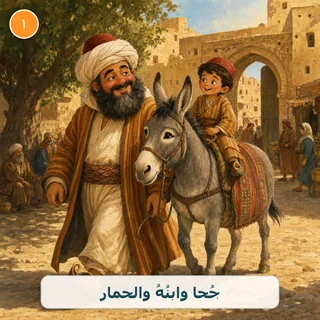
Juha, His Son, and the Donkey
جُحا وابنُهُ والحمار
Juha and his son try every way to ride their donkey — and please no one.
-
Free
 Book 1
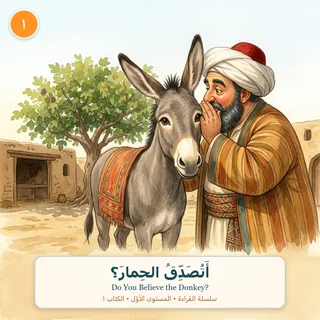
Do You Believe the Donkey?
أَتُصَدِّقُ الحِمارَ؟
Juha tells his neighbour the donkey isn't home — and the donkey brays.
The shortest vowelled stories, for ages 4–7
Juha's Tales is a series of 28 picture books with three reading levels. Level 1 has the shortest pages: two to four short sentences each, sixteen pages a book. These ten are the best place for a child who has just learned the marks. "Juha's Pot That Gave Birth" and "Juha and the Moon in the Well" are favourites, and "My Donkey Can Read" is a story about patience and practice, which suits a new reader well.
-
 Book 2
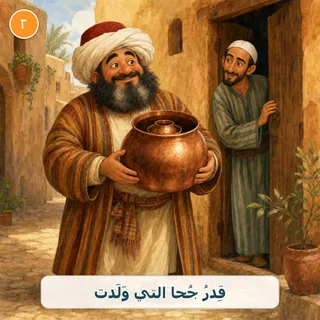
Juha's Pot That Gave Birth
قِدرُ جُحا التي وَلَدت
The borrowed pot “gives birth” — so why can't it die? A witty lesson in fairness.
-
 Book 3
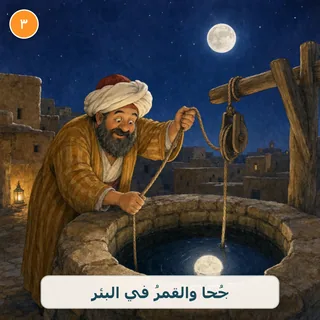
Juha and the Moon in the Well
جُحا والقمرُ في البئر
Juha heroically “rescues” the moon from the well — and learns about reflections.
-
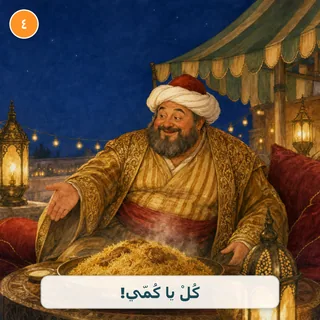 Book 4
Eat, O My Sleeve!
كُلْ يا كُمّي!
Snubbed in old clothes, honoured in a splendid robe — so Juha feeds the robe.
-
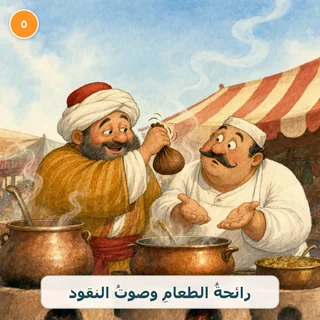 Book 5
The Smell of Food and the Sound of Coins
رائحةُ الطعامِ وصوتُ النقود
A cook charges for the smell of food; Juha pays him with the sound of coins.
-
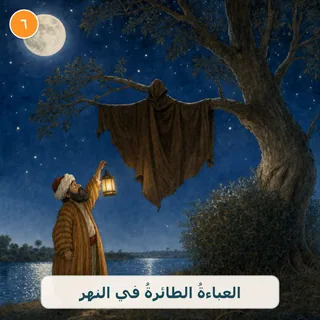 Book 6
The Cloak That Flew into the River
العباءةُ الطائرةُ في النهر
A “stranger” in the tree turns out to be Juha's own washed cloak — thank God he wasn't in it!
-
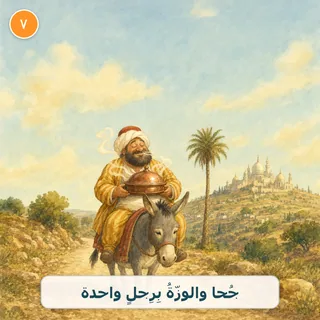 Book 7
Juha and the One-Legged Goose
جُحا والوزّةُ بِرِجلٍ واحدة
Juha eats one goose leg, then proves all geese have one leg — until the drums roll.
-
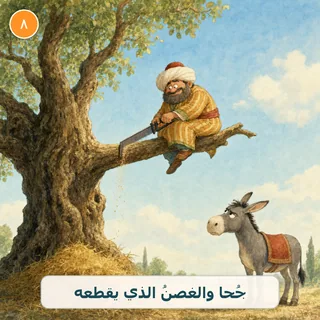 Book 8
Juha and the Branch He Was Cutting
جُحا والغصنُ الذي يقطعه
Sitting on the very branch he saws, Juha ignores good advice — once.
-
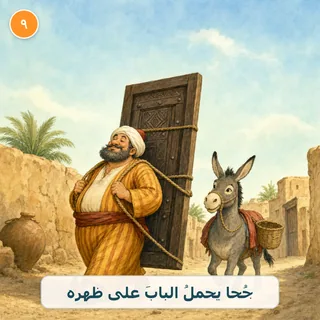 Book 9
Juha Carries the Door on His Back
جُحا يحملُ البابَ على ظهره
No door, no burglars? Juha takes home security very literally.
-
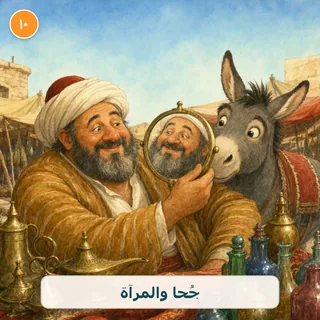 Book 10
Juha and the Mirror
جُحا والمرآة
One mirror, three different “portraits” — a warm family puzzle about seeing ourselves.
-
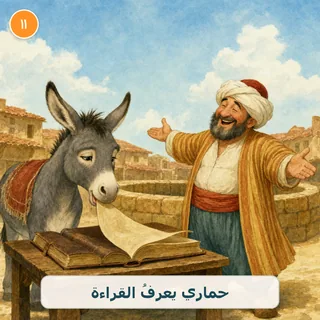 Book 11
My Donkey Can Read
حماري يعرفُ القراءة
With barley between the pages, Juha's donkey learns to “read” — and reviews the book out loud.
When these feel easy, the rest of Juha's Tales moves on to slightly longer pages.
Vowelled readers for older children, teens and adults
Tashkeel is not only for little ones. Arabic Readers Level 1 is a set of 15 bilingual readers for children of about ten and up, teens and adults. Every Arabic word is vowelled, and every scene is followed by the same scene in English. The tales are classics: "The Monkey and the Tortoise" from Kalila wa Dimna, "Ali Baba and the Forty Thieves", "Hatim al-Tai's Generosity" and more.
-
Free
Book 1
Do You Believe the Donkey?
أَتُصَدِّقُ الحِمارَ؟
Juha tells his neighbour the donkey isn't home — and the donkey brays.
-
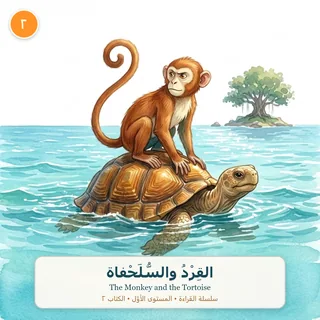 Book 2
The Monkey and the Tortoise
القِرْدُ والسُّلَحْفاة
Halfway across the sea, the monkey learns his friend wants his heart.
-
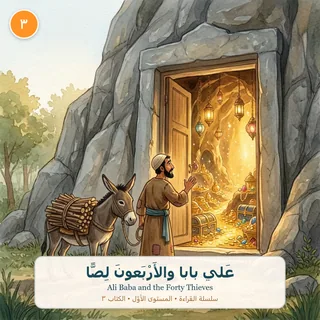 Book 3
Ali Baba and the Forty Thieves
عَلي بابا والأَرْبَعونَ لِصًّا
"Open, Sesame!" — two magic words, one greedy brother and a very clever servant.
-
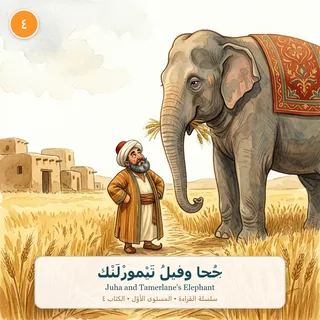 Book 4
Juha and Tamerlane's Elephant
جُحا وفيلُ تَيْمورْلَنْك
The villagers want Juha to complain to the emperor — then they vanish one by one.
-
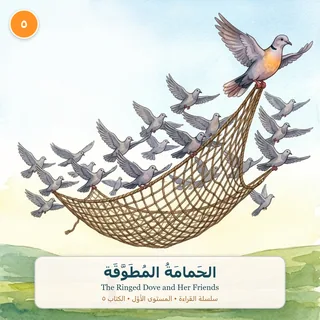 Book 5
The Ringed Dove and Her Friends
الحَمامَةُ المُطَوَّقَة
A flock trapped in a net, a mouse with sharp teeth, and friends who never leave each other.
-
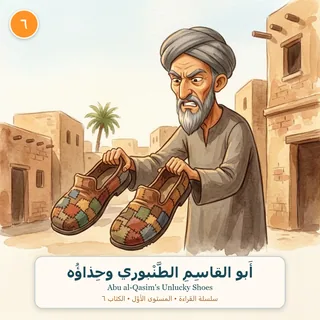 Book 6
Abu al-Qasim's Unlucky Shoes
أَبو القاسِمِ الطَّنْبوري وحِذاؤُه
A stingy man tries to get rid of his old shoes — and they keep coming back.
-
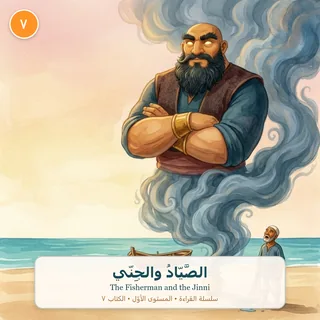 Book 7
The Fisherman and the Jinni
الصَّيّادُ والجِنّي
A poor fisherman opens a sealed brass jar — and a furious giant rises out of it.
-
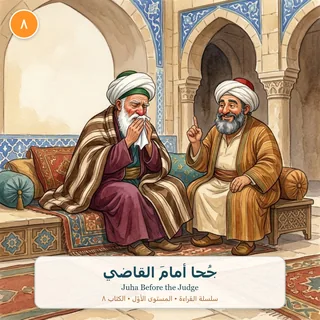 Book 8
Juha Before the Judge
جُحا أمامَ القاضي
Juha tells both men they are right — and then tells the judge he is right too.
-
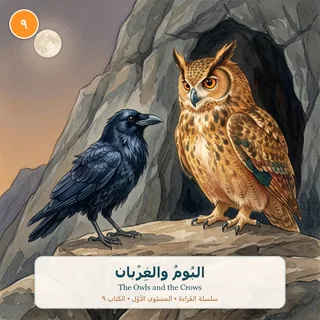 Book 9
The Owls and the Crows
البُومُ والغِرْبان
One old crow walks into the enemy's cave alone — with a plan.
-
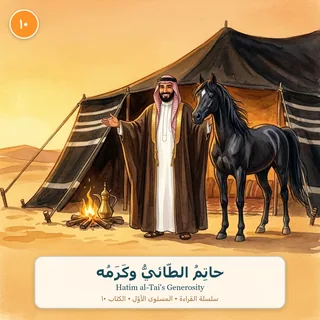 Book 10
Hatim al-Tai's Generosity
حاتِمُ الطّائيُّ وكَرَمُه
A king sends men to ask for Hatim's famous horse. Hatim has already served it for dinner.
-
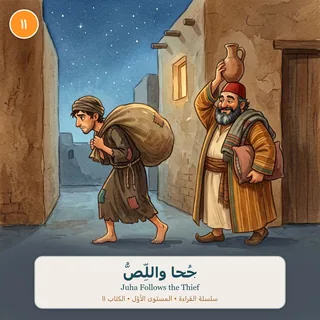 Book 11
Juha Follows the Thief
جُحا واللِّصُّ
A thief robs Juha's house at night — and Juha follows him home with the rest.
-
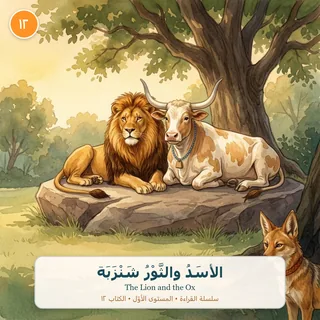 Book 12
The Lion and the Ox
الأسَدُ والثَّوْرُ شَنْزَبَة
A lion and an ox become true friends — until a jealous jackal starts whispering.
-
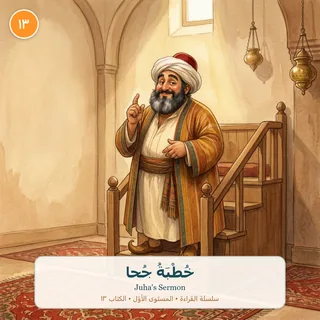 Book 13
Juha's Sermon
خُطْبَةُ جُحا
"Do you know what I'm going to say?" Juha's shortest talks ever.
-
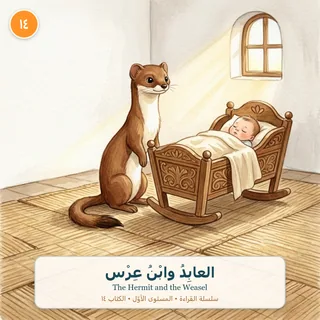 Book 14
The Hermit and the Weasel
العابِدُ وابْنُ عِرْس
A faithful weasel guards a baby — and one moment of haste changes everything.
-
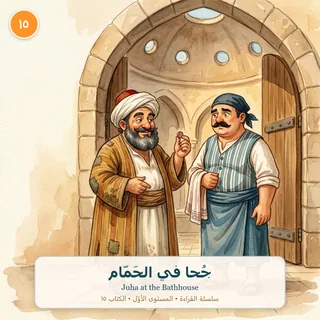 Book 15
Juha at the Bathhouse
جُحا في الحَمّام
Ignored in old clothes, Juha tips in gold. Treated like a prince, he tips a copper.
How to use a vowelled story at home
- Listen to one page first, with the child watching the words light up.
- Play it again and let the child follow with a finger.
- Stop the voice and let the child read the page aloud. Tap any word that is hard.
- Stop after ten minutes, even if it is going well. Tomorrow is another page.
Many parents find that slowing the voice to 0.75× helps in the first weeks. For a fuller routine, see learn to read Arabic.
Common questions
Is every word vowelled, or only the hard ones?
Every word, in every book of both series. Short common words, names and word endings all carry their marks. A child never has to guess a vowel, and a parent who is unsure of the correct reading can simply tap the word and hear it.
What is the difference between tashkeel and harakat?
In everyday use they mean the same thing: the small marks that show the short vowels and doubled letters in Arabic. Harakat is the name for the vowel marks themselves, and tashkeel is the act of adding them to a text. Parents search for both words.
Which story should a beginner start with?
Start with the free Book 1, "Juha, His Son, and the Donkey". After that, choose from Level 1 of Juha's Tales, where the pages are shortest. "Eat, O My Sleeve!" and "Juha and the Mirror" are funny, easy to follow and good for reading again.
How much do the books cost?
Book 1 of each series is free. Every other book costs $3.99. All 28 of Juha's Tales together cost $49.99, and all 15 Arabic Readers Level 1 cost $34.99. A bundle also includes books added to that series later.