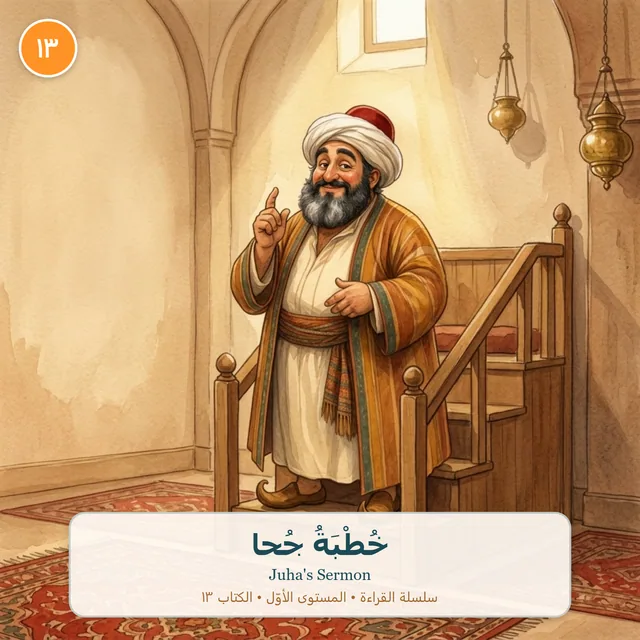
Arabic Readers Level 1 · Book 13
Juha's Sermon
خُطْبَةُ جُحا
A bilingual Arabic–English story for older children (about 10+), teens and adults learning Arabic: the reader hears each scene in Arabic while every word lights up, then reads it in English. This book is $3.99, or get all 15 books in the series for $34.99.
Last reviewed:
"Do you know what I'm going to say?" Juha's shortest talks ever.
- Series
- Arabic Readers Level 1, Book 13 of 15
- For
- Teens (12+) and adults
- Language
- Arabic (Modern Standard, full tashkeel), each scene followed by the same scene in English
- Length
- 6 short scenes · about 631 Arabic words
- Level
- Level 1 · about CEFR A2
- Read-aloud
- Yes — Arabic and English, every word highlighted as it is read
- Price
- $3.99
The story
The people of the town ask Juha to give the Friday talk. He climbs the steps and asks, "Do you know what I'm going to tell you?" "No," they answer — so he leaves. The next week they plan to say "Yes" — so he leaves again. The third week half say yes and half say no. Juha's answer is the first anecdote in the oldest English collection of his tales, and it is still quoted today.
The lesson: Those who know should teach those who do not.
Read the first scene
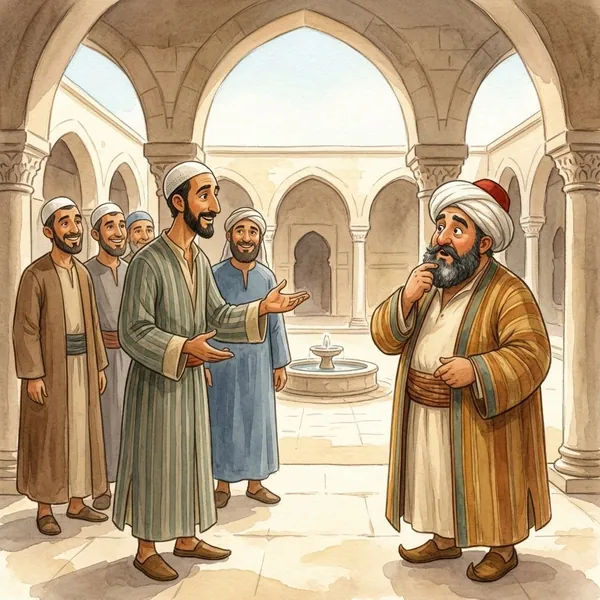
طَلَبُ أَهْلِ البَلْدَةِ
فِي بَلْدَةِ جُحَا، كَانَ الشَّيْخُ الَّذِي يَخْطُبُ كُلَّ جُمُعَةٍ قَدْ سَافَرَ إِلَى الْحَجِّ. فَاجْتَمَعَ أَهْلُ الْبَلْدَةِ فِي سَاحَةِ الْمَسْجِدِ، وَقَالُوا: «مَنْ يَخْطُبُ فِينَا حَتَّى يَرْجِعَ الشَّيْخُ؟».
قَالَ أَبُو الْخَيْرِ: «جُحَا! جُحَا يَعْرِفُ الْحِكَايَاتِ، وَيَتَكَلَّمُ كَلَامًا جَمِيلًا».
فَذَهَبُوا إِلَيْهِ، وَقَالُوا: «يَا جُحَا، نُرِيدُ أَنْ تُكَلِّمَنَا يَوْمَ الْجُمُعَةِ، وَتُعَلِّمَنَا شَيْئًا مُفِيدًا».
حَكَّ جُحَا لِحْيَتَهُ، وَقَالَ: «أَنَا؟ لَكِنِّي لَمْ أَفْعَلْ هَذَا مِنْ قَبْلُ».
قَالُوا: «لَا بَأْسَ. أَنْتَ رَجُلٌ كَبِيرٌ، وَعِنْدَكَ تَجْرِبَةٌ. قُلْ لَنَا مَا تَعْرِفُ».
فَكَّرَ جُحَا قَلِيلًا، ثُمَّ ابْتَسَمَ وَقَالَ: «حَسَنًا. سَأَجِيءُ يَوْمَ الْجُمُعَةِ». وَرَجَعَ إِلَى بَيْتِهِ، وَجَلَسَ تَحْتَ شَجَرَةِ التِّينِ يُفَكِّرُ: مَاذَا أَقُولُ لَهُمْ؟ وَفَكَّرَ، وَفَكَّرَ، حَتَّى نَامَ فِي مَكَانِهِ، وَلَمْ يَجِدْ شَيْئًا يَقُولُهُ.
The Town's Request
In Juha's town, the elder who gave the talk every Friday had gone away on pilgrimage. So the townspeople gathered in the mosque courtyard and said, "Who will give us the Friday talk until the elder comes back?"
Abu al-Khair said, "Juha! Juha knows stories, and he speaks beautifully."
So they went to him and said, "Juha, we want you to speak to us on Friday and teach us something useful."
Juha scratched his beard and said, "Me? But I've never done this before."
They said, "Never mind. You're an older man, and you have experience. Tell us what you know."
Juha thought for a moment, then smiled and said, "All right. I'll come on Friday." He went home and sat under the fig tree thinking: what shall I tell them? He thought and thought until he fell asleep where he sat, without finding anything to say.
Glossary
These words from the story are explained in the glossary at the back of the book.
| Arabic | Say it | Meaning |
|---|---|---|
| خُطْبَة | khuṭba | sermon, Friday talk |
| مِنْبَر | minbar | pulpit (stepped platform in a mosque) |
| الجُمُعَة – جُمُعات | al-jumuʿa – jumuʿāt | Friday – Fridays |
| مَسْجِد | masjid | mosque |
| اجْتَمَعَ – يَجْتَمِعُ | ijtamaʿa – yajtamiʿu | to gather, meet |
| تَجْرِبَة | tajriba | experience |
| فائِدَة | fāʾida | use, benefit |
| لا حاجَةَ | lā ḥājata | there is no need |
| اتَّفَقَ – يَتَّفِقُ | ittafaqa – yattafiqu | to agree |
| جِهَة | jiha | side, direction |
| هَرَبَ – يَهْرُبُ | haraba – yahrubu | to escape, run away |
| عَلَّمَ – يُعَلِّمُ | ʿallama – yuʿallimu | to teach |
| حَكَّ – يَحُكُّ | ḥakka – yaḥukku | to scratch |
| ما شاءَ اللهُ | mā shāʾa llāh | "How wonderful!" (lit. what God has willed) |
| خَطَبَ – يَخْطُبُ | khaṭaba – yakhṭubu | to give a sermon, speak to a crowd |
About this book
- A Level 1 reader for teens and adults learning Arabic — from complete beginners to those who understand Arabic but read it slowly.
- One complete classic tale in short scenes. Each scene comes twice: first in simple Modern Standard Arabic with full tashkeel, then the same scene in natural English.
- Both languages are read aloud with each word highlighted as it is spoken, on any phone, tablet or computer.
- A glossary with transliteration, and a note on where the tale comes from. Each book stands alone.