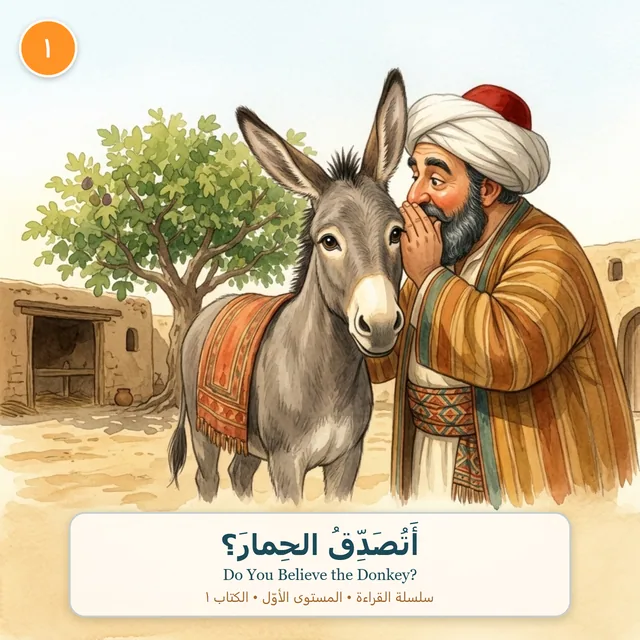
Arabic Readers Level 1 · Book 1
Do You Believe the Donkey?
أَتُصَدِّقُ الحِمارَ؟
A bilingual Arabic–English story for older children (about 10+), teens and adults learning Arabic: the reader hears each scene in Arabic while every word lights up, then reads it in English. This book is free: sign in with your email and read it now.
Last reviewed:
Juha tells his neighbour the donkey isn't home — and the donkey brays.
- Series
- Arabic Readers Level 1, Book 1 of 15
- For
- Teens (12+) and adults
- Language
- Arabic (Modern Standard, full tashkeel), each scene followed by the same scene in English
- Length
- 6 short scenes · about 685 Arabic words
- Level
- Level 1 · about CEFR A2
- Read-aloud
- Yes — Arabic and English, every word highlighted as it is read
- Price
- Free
The story
Juha's donkey is tired, and Juha has decided it will rest today. So when his neighbour knocks to borrow it, Juha — too shy to say no — claims the donkey has gone to another village. At that very moment the donkey brays from the stable. Juha's answer is one of the most famous lines in Arabic humour: "You believe a donkey rather than me, a man with a grey beard?" With the whole lane laughing, Juha finally tells the truth — and it works far better than the lie.
The lesson: A small lie is heard by everyone — say the truth kindly from the start.
The story
Read the first scene
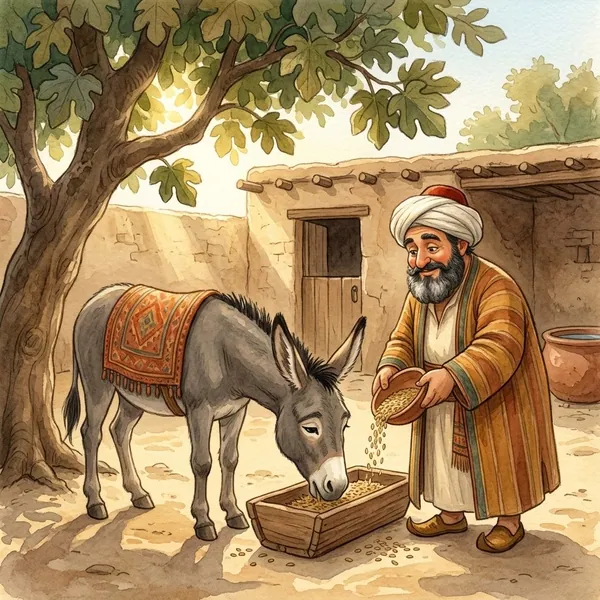
صَباحٌ هادِئٌ
فِي صَبَاحِ يَوْمٍ جَمِيلٍ، خَرَجَ جُحَا إِلَى سَاحَةِ بَيْتِهِ الصَّغِيرَةِ. كَانَتِ الشَّمْسُ دَافِئَةً، وَكَانَتْ شَجَرَةُ التِّينِ تُعْطِي ظِلًّا لَطِيفًا عَلَى الْأَرْضِ. وَتَحْتَ الشَّجَرَةِ وَقَفَ حِمَارُهُ الرَّمَادِيُّ، يَنْظُرُ إِلَيْهِ بِعَيْنَيْنِ مُتْعَبَتَيْنِ.
أَمْسِ حَمَلَ الْحِمَارُ الْحَطَبَ مِنَ الْجَبَلِ إِلَى السُّوقِ، وَمَشَى طَرِيقًا طَوِيلًا تَحْتَ الشَّمْسِ. لِذَلِكَ كَانَتْ أَرْجُلُهُ تُؤْلِمُهُ، وَكَانَ ظَهْرُهُ مُتْعَبًا، وَلَمْ يَأْكُلْ عَشَاءَهُ كُلَّهُ.
كَانَ جُحَا رَجُلًا طَيِّبَ الْقَلْبِ، لَا يُحِبُّ أَنْ يَرَى حَيَوَانًا يَتْعَبُ. مَسَحَ رَأْسَ الْحِمَارِ بِيَدِهِ، وَقَالَ لَهُ بِصَوْتٍ هَادِئٍ: «اَلْيَوْمَ يَوْمُ رَاحَةٍ يَا صَدِيقِي. لَنْ تَحْمِلَ شَيْئًا، وَلَنْ تَمْشِيَ إِلَى أَيِّ مَكَانٍ».
ثُمَّ وَضَعَ أَمَامَهُ الشَّعِيرَ وَالْمَاءَ الصَّافِيَ. أَكَلَ الْحِمَارُ بِسُرُورٍ، وَحَرَّكَ أُذُنَيْهِ الطَّوِيلَتَيْنِ كَأَنَّهُ يَقُولُ: شُكْرًا يَا جُحَا.
جَلَسَ جُحَا عَلَى حَجَرٍ قَرِيبٍ وَابْتَسَمَ، وَقَالَ فِي نَفْسِهِ: «يَوْمٌ هَادِئٌ لِي وَلِحِمَارِي».
A Quiet Morning
One fine morning, Juha stepped out into the small courtyard of his house. The sun was warm, and the fig tree threw a gentle shade on the ground. Under the tree stood his grey donkey, looking at him with tired eyes.
Yesterday the donkey had carried firewood from the mountain to the market and walked a long way in the sun. So his legs hurt, his back was tired, and he had not finished his supper.
Juha was a kind-hearted man who hated to see an animal worn out. He stroked the donkey's head and said to him quietly, "Today is a day of rest, my friend. You won't carry anything, and you won't walk anywhere."
Then he set barley and clear water in front of him. The donkey ate happily and twitched his long ears, as if to say, "Thank you, Juha."
Juha sat down on a stone nearby, smiled and said to himself, "A quiet day for me and my donkey."
Glossary
These words from the story are explained in the glossary at the back of the book.
| Arabic | Say it | Meaning |
|---|---|---|
| حِمار | ḥimār | donkey |
| جار | jār | neighbour |
| أَعارَ – يُعِيرُ | aʿāra – yuʿīru | to lend |
| طاحُونَة | ṭāḥūna | mill (for grinding grain) |
| قَمْح | qamḥ | wheat |
| شَعِير | shaʿīr | barley (animal feed) |
| نَهَقَ – يَنْهَقُ | nahaqa – yanhaqu | to bray (a donkey's call) |
| إِسْطَبْل | isṭabl | stable (a house for animals) |
| لِحْيَة | liḥya | beard |
| صَدَّقَ – يُصَدِّقُ | ṣaddaqa – yuṣaddiqu | to believe (someone) |
| خَجِلَ – يَخْجَلُ | khajila – yakhjalu | to feel shy or ashamed |
| غُرُوبُ الشَّمْس | ghurūb ash-shams | sunset |
| كِذْبَة | kidhba | a lie |
| فَوْقَ طاقَتِهِ | fawqa ṭāqatihi | beyond his strength |
About this book
- A Level 1 reader for teens and adults learning Arabic — from complete beginners to those who understand Arabic but read it slowly.
- One complete classic tale in short scenes. Each scene comes twice: first in simple Modern Standard Arabic with full tashkeel, then the same scene in natural English.
- Both languages are read aloud with each word highlighted as it is spoken, on any phone, tablet or computer.
- A glossary with transliteration, and a note on where the tale comes from. Each book stands alone.