Arabic Readers Level 1 · Book 4
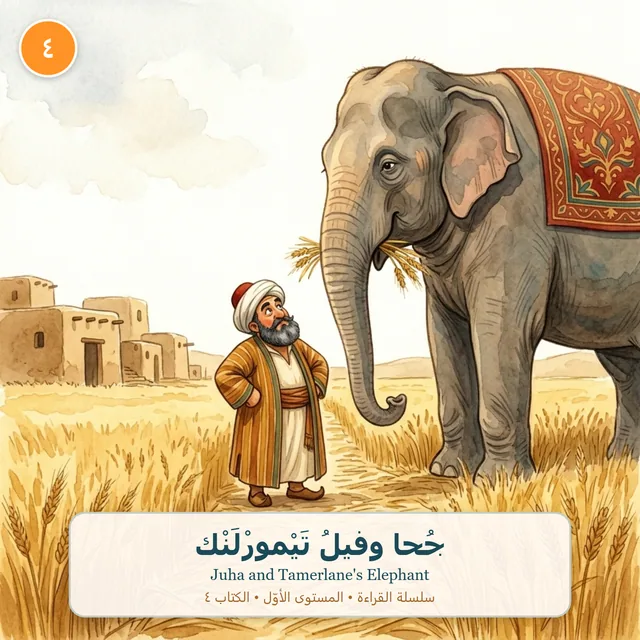
Juha and Tamerlane's Elephant
جُحا وفيلُ تَيْمورْلَنْك
A bilingual Arabic–English story for older children (about 10+), teens and adults learning Arabic: the reader hears each scene in Arabic while every word lights up, then reads it in English. This book is $3.99, or get all 15 books in the series for $34.99.
Last reviewed:
The villagers want Juha to complain to the emperor — then they vanish one by one.
- Series
- Arabic Readers Level 1, Book 4 of 15
- For
- Teens (12+) and adults
- Language
- Arabic (Modern Standard, full tashkeel), each scene followed by the same scene in English
- Length
- 6 short scenes · about 615 Arabic words
- Level
- Level 1 · about CEFR A2
- Read-aloud
- Yes — Arabic and English, every word highlighted as it is read
- Price
- $3.99
The story
The emperor Tamerlane's giant elephant is eating a village's wheat, and nobody dares to complain. The villagers beg Juha to speak for them and promise to stand behind him to the end. But on the road to the camp they slip away one by one, and Juha arrives alone before the feared emperor. So Juha changes the complaint into a request — one the villagers will never forget.
The lesson: Whoever deserts a friend in hard times carries the result of his fear.
Read the first scene
فيلٌ في الحُقولِ
فِي زَمَنٍ قَدِيمٍ، جَاءَ الْمَلِكُ تِيمُورْلَنْكَ بِجَيْشِهِ الْكَبِيرِ، وَنَزَلَ قُرْبَ قَرْيَةِ جُحَا. كَانَ تِيمُورْلَنْكَ مَلِكًا قَوِيًّا، يَخَافُهُ النَّاسُ فِي كُلِّ مَكَانٍ.
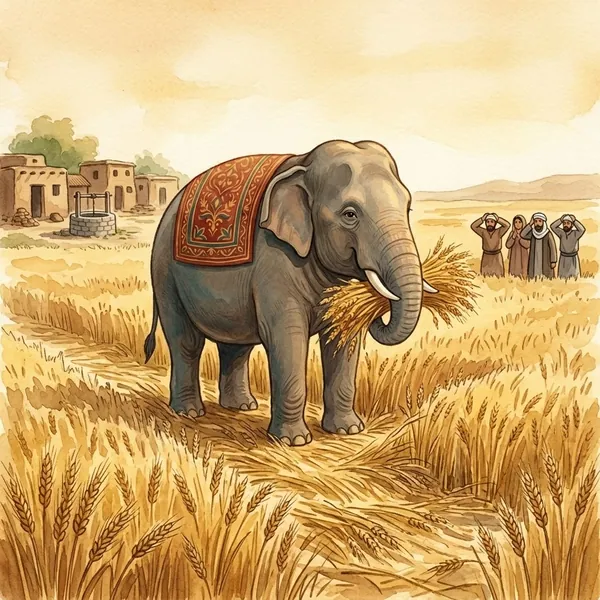
وَكَانَ عِنْدَهُ فِيلٌ ضَخْمٌ يُحِبُّهُ كَثِيرًا. تَرَكَ الْفِيلَ يَمْشِي حُرًّا حَوْلَ الْقَرْيَةِ، وَيَأْكُلُ مَا يُرِيدُ.
أَكَلَ الْفِيلُ الْقَمْحَ فِي الْحُقُولِ، وَأَكَلَ الْخَضَارَ فِي الْبَسَاتِينِ، وَشَرِبَ مِنَ الْبِئْرِ حَتَّى كَادَ مَاؤُهَا يَنْتَهِي. وَكَانَ يَدُوسُ الزَّرْعَ بِأَقْدَامِهِ الْكَبِيرَةِ، فَلَا يَبْقَى مِنْهُ شَيْءٌ.
حَزِنَ أَهْلُ الْقَرْيَةِ حُزْنًا شَدِيدًا. كَانُوا يَقِفُونَ مِنْ بَعِيدٍ، وَيَنْظُرُونَ إِلَى الْفِيلِ وَهُوَ يَأْكُلُ تَعَبَهُمْ، وَلَا يَسْتَطِيعُ أَحَدٌ مِنْهُمْ أَنْ يَقْتَرِبَ مِنْهُ.
قَالَ رَجُلٌ مِنْهُمْ: «إِذَا بَقِيَ هَذَا الْفِيلُ شَهْرًا آخَرَ، سَنَمُوتُ مِنَ الْجُوعِ». وَقَالَ آخَرُ: «وَلَكِنْ مَنْ يَجْرُؤُ أَنْ يَشْكُوَ إِلَى تِيمُورْلَنْكَ؟».
An Elephant in the Fields
Long ago, King Tamerlane came with his great army and made camp near Juha's village. Tamerlane was a powerful king, and people everywhere feared him.
He had a huge elephant that he loved very much. He let the elephant wander freely around the village and eat whatever it wanted.
The elephant ate the wheat in the fields, ate the vegetables in the orchards, and drank from the well until its water nearly ran out. It trampled the crops with its great feet, so that nothing was left of them.
The villagers were deeply distressed. They stood at a distance and watched the elephant eating the fruit of their hard work, and not one of them could go near it.
One man said, "If this elephant stays another month, we'll die of hunger." Another said, "But who dares complain to Tamerlane?"
Glossary
These words from the story are explained in the glossary at the back of the book.
| Arabic | Say it | Meaning |
|---|---|---|
| فِيل – فِيلَة | fīl – fīla | elephant – female elephant |
| عِمامَة | ʿimāma | turban |
| حَقْل – حُقُول | ḥaql – ḥuqūl | field – fields |
| بُسْتان – بَساتِين | bustān – basātīn | orchard, garden |
| زَرْع | zarʿ | crops, what is planted |
| داسَ – يَدُوسُ | dāsa – yadūsu | to trample, tread on |
| جَرُؤَ – يَجْرُؤُ | jaruʾa – yajruʾu | to dare |
| مُعَسْكَر | muʿaskar | (army) camp |
| خَيْمَة | khayma | tent |
| عَرْش | ʿarsh | throne |
| شَكْوى | shakwā | complaint |
| مَوْلاي | mawlāy | my lord (to a king) |
| عَقَدَ حاجِبَيْهِ | ʿaqada ḥājibayhi | he frowned |
| شِدَّة | shidda | hardship, a hard time |
| انْحَنى – يَنْحَني | inḥanā – yanḥanī | to bow |
About this book
- A Level 1 reader for teens and adults learning Arabic — from complete beginners to those who understand Arabic but read it slowly.
- One complete classic tale in short scenes. Each scene comes twice: first in simple Modern Standard Arabic with full tashkeel, then the same scene in natural English.
- Both languages are read aloud with each word highlighted as it is spoken, on any phone, tablet or computer.
- A glossary with transliteration, and a note on where the tale comes from. Each book stands alone.