
Fanous · Arabic stories for children
Arabic for kids abroad, even if you do not read Arabic
For families outside the Arab world with children aged 4 and up, including parents who do not read Arabic. The child listens while each word lights up, then reads. Book 1 of each series is free.
Last reviewed:
Keeping Arabic alive in a home where school, friends and screens are all in another language is hard work. It is harder still when one parent, or both, cannot read Arabic. Stories that read themselves aloud take some of the weight: your child hears clear, correct Arabic every day, and you do not have to be the teacher.
You do not need to read Arabic
A clear Arabic voice reads every page. Each word lights up as it is spoken, so your child sees and hears the word together. Tapping any word plays it again, and the voice can be slowed to 0.75×.
Every book in Juha's Tales also has an English "For Parents" page with three things on it:
- the story in brief, so you know what your child has just heard
- a question to talk about afterwards, in any language you share
- ten key words with their pronunciation, so you can learn a few alongside your child
The stories are in simple Modern Standard Arabic with the vowel marks on every word. This is the Arabic of books and school, the form a child needs in order to read. Our For Parents page explains the vowel marks and the read-aloud in plain English.
Start with the two free books
Book 1 of each series is free once you sign in with an email. You can read the whole first story now, in Arabic with an English summary, on the page for Juha, His Son, and the Donkey.
-
Free
 Book 1
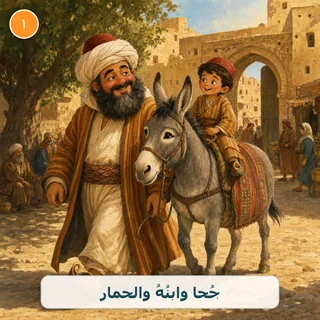
Juha, His Son, and the Donkey
جُحا وابنُهُ والحمار
Juha and his son try every way to ride their donkey — and please no one.
-
Free
 Book 1
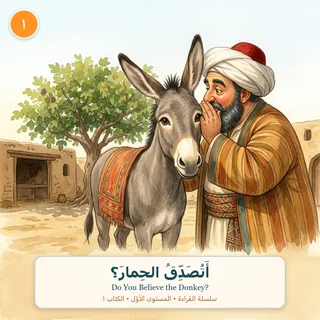
Do You Believe the Donkey?
أَتُصَدِّقُ الحِمارَ؟
Juha tells his neighbour the donkey isn't home — and the donkey brays.
Picture books for ages 4–7: Juha's Tales
Juha is the funny, kind-hearted man of Arabic folklore, and grandparents across the Arab world know his stories. That makes these 28 picture books a link to family as well as reading practice: a child can tell Grandma the story of "Eat, O My Sleeve!" on the next call. Each book is 16 pages with a gentle lesson, such as honesty in "Juha Always Tells the Truth" or patience in "Juha Plows and Plants Patience".
-
Free
Book 1
Juha, His Son, and the Donkey
جُحا وابنُهُ والحمار
Juha and his son try every way to ride their donkey — and please no one.
-
 Book 2
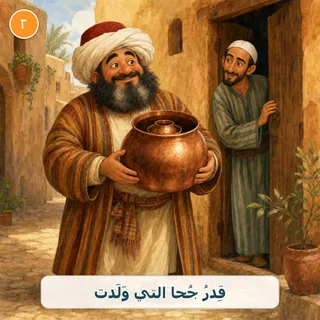
Juha's Pot That Gave Birth
قِدرُ جُحا التي وَلَدت
The borrowed pot “gives birth” — so why can't it die? A witty lesson in fairness.
-
 Book 3
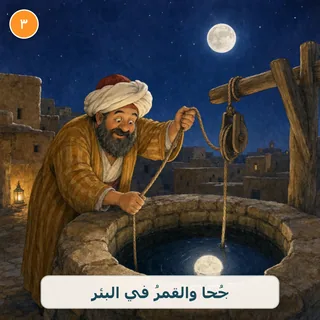
Juha and the Moon in the Well
جُحا والقمرُ في البئر
Juha heroically “rescues” the moon from the well — and learns about reflections.
-
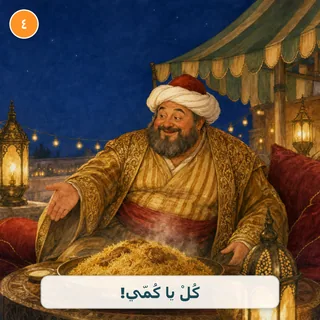 Book 4
Eat, O My Sleeve!
كُلْ يا كُمّي!
Snubbed in old clothes, honoured in a splendid robe — so Juha feeds the robe.
-
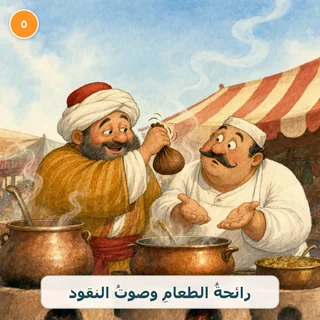 Book 5
The Smell of Food and the Sound of Coins
رائحةُ الطعامِ وصوتُ النقود
A cook charges for the smell of food; Juha pays him with the sound of coins.
-
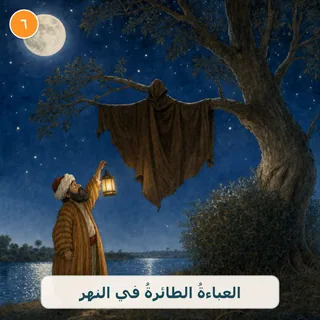 Book 6
The Cloak That Flew into the River
العباءةُ الطائرةُ في النهر
A “stranger” in the tree turns out to be Juha's own washed cloak — thank God he wasn't in it!
-
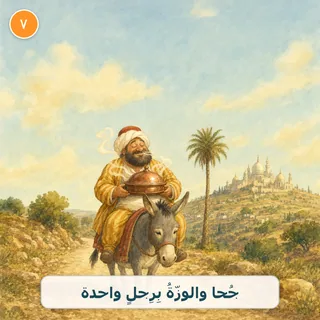 Book 7
Juha and the One-Legged Goose
جُحا والوزّةُ بِرِجلٍ واحدة
Juha eats one goose leg, then proves all geese have one leg — until the drums roll.
-
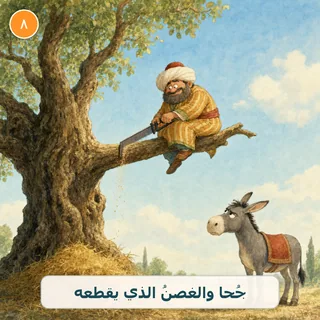 Book 8
Juha and the Branch He Was Cutting
جُحا والغصنُ الذي يقطعه
Sitting on the very branch he saws, Juha ignores good advice — once.
-
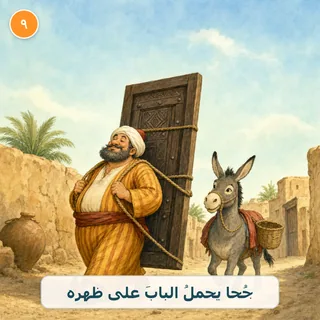 Book 9
Juha Carries the Door on His Back
جُحا يحملُ البابَ على ظهره
No door, no burglars? Juha takes home security very literally.
-
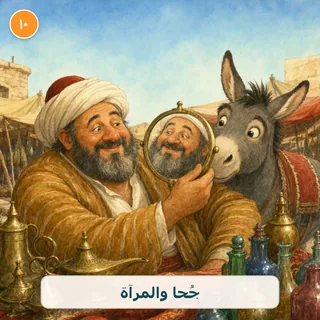 Book 10
Juha and the Mirror
جُحا والمرآة
One mirror, three different “portraits” — a warm family puzzle about seeing ourselves.
-
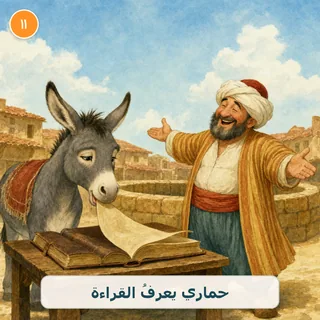 Book 11
My Donkey Can Read
حماري يعرفُ القراءة
With barley between the pages, Juha's donkey learns to “read” — and reviews the book out loud.
-
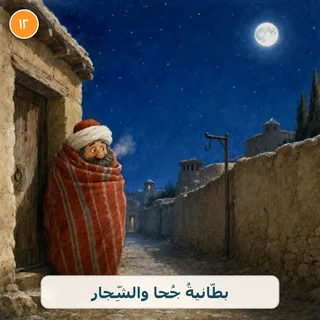 Book 12
Juha's Blanket and the Quarrel
بطّانيةُ جُحا والشِّجار
A midnight quarrel ends the moment Juha's blanket is snatched — so that's what it was about!
-
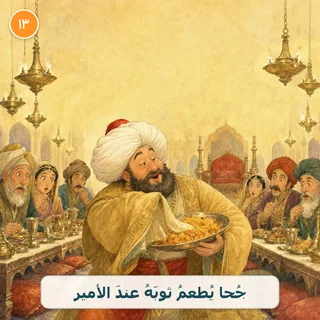 Book 13
Juha Feeds His Robe at the Prince's Palace
جُحا يُطعمُ ثوبَهُ عندَ الأمير
The sleeve-feeding lesson goes royal: Juha teaches the prince's court to honour minds, not garments.
-
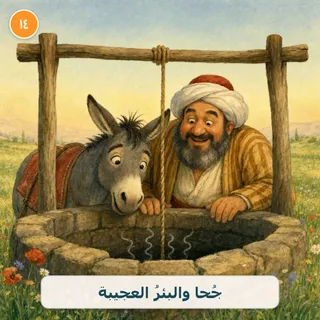 Book 14
Juha and the Wondrous Well
جُحا والبئرُ العجيبة
Who is the stubborn man at the bottom of the well? A playful first lesson in echoes — and kindness.
-
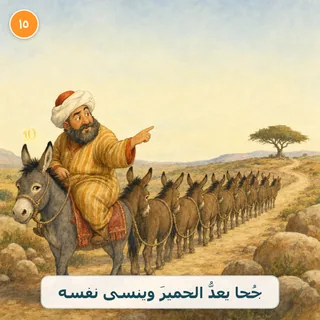 Book 15
Juha Counts the Donkeys and Forgets Himself
جُحا يعدُّ الحميرَ وينسى نفسه
Mounted, Juha counts nine donkeys; on foot, ten. His little son spots the missing one — right under him.
-
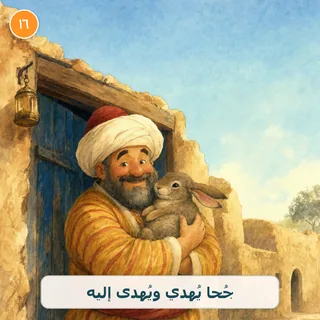 Book 16
Juha Gives and Receives Gifts
جُحا يُهدي ويُهدى إليه
“Neighbours of the friend of the man who brought the hare” get the water-of-the-water of its soup — then a real feast.
-
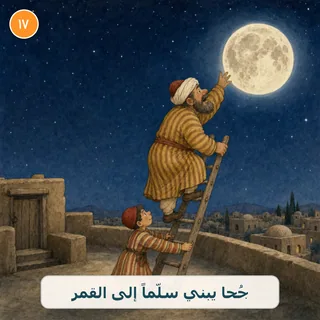 Book 17
Juha Builds a Ladder to the Moon
جُحا يبني سلّماً إلى القمر
When ladders can't reach the moon, Juha catches it in a bucket for his son. Pure wonder.
-
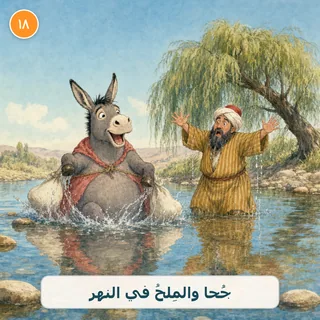 Book 18
Juha and the Salt in the River
جُحا والمِلحُ في النهر
The donkey's dissolving-salt trick meets Juha's counter-move: a load of cotton. Outsmarting, with love.
-
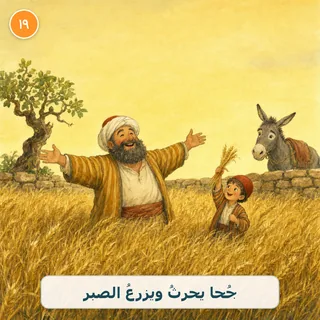 Book 19
Juha Plows and Plants Patience
جُحا يحرثُ ويزرعُ الصبر
From seed to the first hot loaf: they planted so we eat; we plant so others will.
-
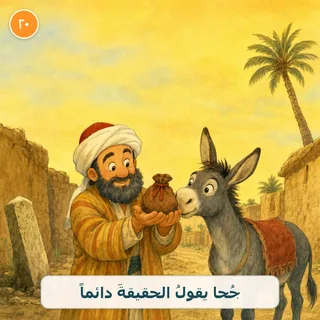 Book 20
Juha Always Tells the Truth
جُحا يقولُ الحقيقةَ دائماً
A hungry Juha returns a found purse untouched — and honesty becomes his shield in court.
-
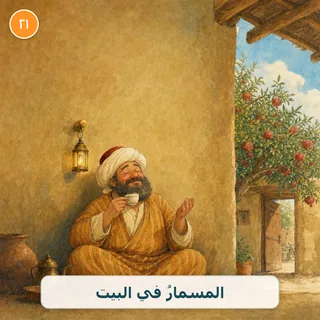 Book 21
The Nail in the House
المسمارُ في البيت
Juha sells the house but keeps one nail — and visiting rights. The proverb, warmly retold.
-
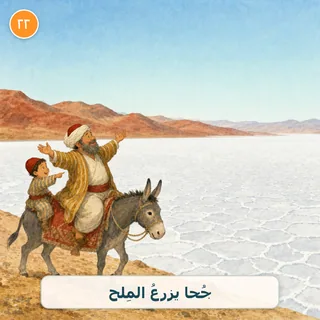 Book 22
Juha Plants the Salt
جُحا يزرعُ المِلح
Can you farm salt? Juha's grand experiment fails beautifully — then finds the real salt flats.
-
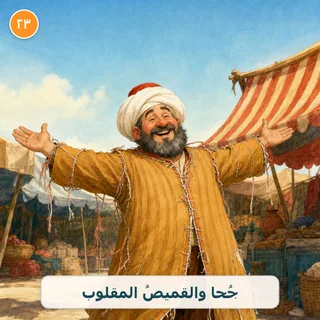 Book 23
Juha and the Inside-Out Robe
جُحا والقميصُ المقلوب
Robe inside-out, market laughing — until Juha declares it his robe's birthday. Laughing at yourself wins.
-
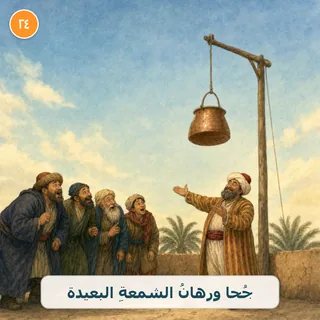 Book 24
Juha and the Bet of the Distant Candle
جُحا ورهانُ الشمعةِ البعيدة
If a candle on a far mountain can warm a man, Juha's tiny candle can cook a hanging pot. Checkmate.
-
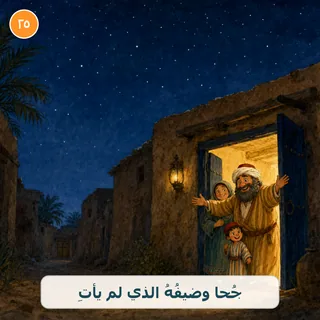 Book 25
Juha and the Guest Who Never Came
جُحا وضيفُهُ الذي لم يأتِ
The guest never comes — so the whole neighbourhood does. Generosity always finds a way.
-
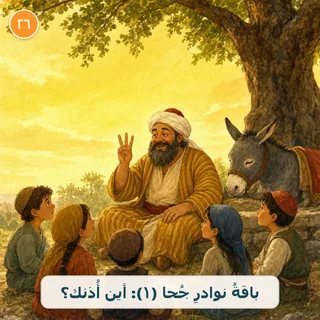 Book 26
A Bouquet of Juha's Tales (1): Where Is Your Ear?
باقةُ نوادرِ جُحا (١): أين أُذنك؟
Three mini-tales: the long way to your ear, thank-God-for-figs, and forever forty.
-
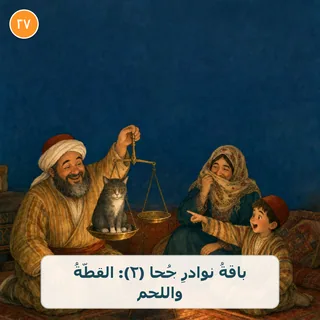 Book 27
A Bouquet of Juha's Tales (2): The Cat and the Meat
باقةُ نوادرِ جُحا (٢): القطّةُ واللحم
Home tales: weighing the cat, one mouth blowing hot and cold, and searching where the light is.
-
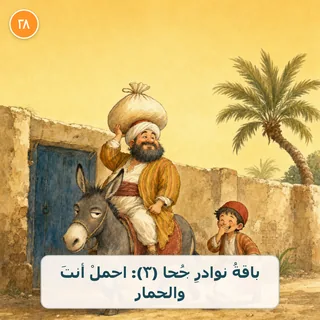 Book 28
A Bouquet of Juha's Tales (3): Carry It, You and the Donkey
باقةُ نوادرِ جُحا (٣): احملْ أنتَ والحمار
Donkey tales: the flour sack on the rider's head, gratitude for a lost donkey, and who rides, who walks.
The Juha's Tales series page lists the books by reading level, starting with the shortest pages.
Arabic and English side by side, for about 10 and up
Older children who speak some Arabic at home but read in English often need something less babyish. Arabic Readers Level 1 has 15 bilingual readers for children of about ten and up, teens and adults. Each book has six short scenes. Every scene comes first in Arabic and then in English, and both are read aloud. A parent who does not know Arabic can follow the English and enjoy the same tale: "Ali Baba and the Forty Thieves", "The Fisherman and the Jinni", "The Ringed Dove and Her Friends".
-
Free
Book 1
Do You Believe the Donkey?
أَتُصَدِّقُ الحِمارَ؟
Juha tells his neighbour the donkey isn't home — and the donkey brays.
-
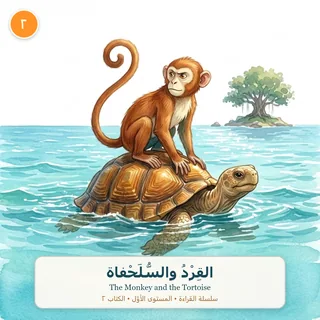 Book 2
The Monkey and the Tortoise
القِرْدُ والسُّلَحْفاة
Halfway across the sea, the monkey learns his friend wants his heart.
-
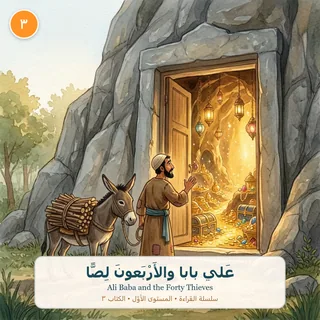 Book 3
Ali Baba and the Forty Thieves
عَلي بابا والأَرْبَعونَ لِصًّا
"Open, Sesame!" — two magic words, one greedy brother and a very clever servant.
-
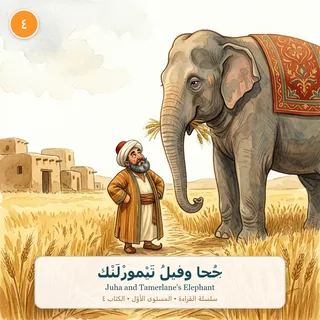 Book 4
Juha and Tamerlane's Elephant
جُحا وفيلُ تَيْمورْلَنْك
The villagers want Juha to complain to the emperor — then they vanish one by one.
-
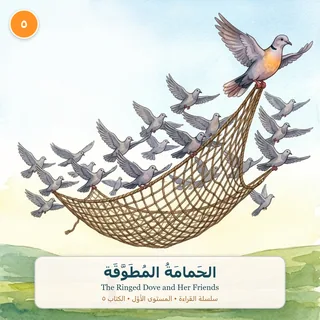 Book 5
The Ringed Dove and Her Friends
الحَمامَةُ المُطَوَّقَة
A flock trapped in a net, a mouse with sharp teeth, and friends who never leave each other.
-
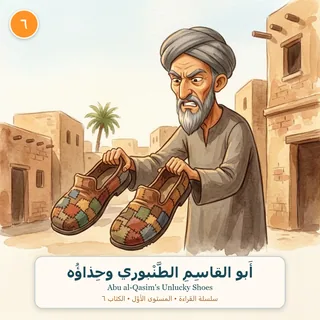 Book 6
Abu al-Qasim's Unlucky Shoes
أَبو القاسِمِ الطَّنْبوري وحِذاؤُه
A stingy man tries to get rid of his old shoes — and they keep coming back.
-
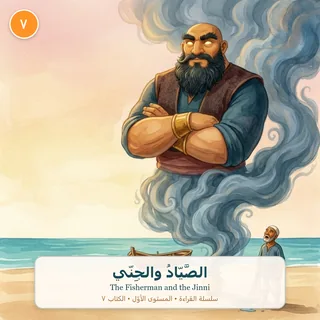 Book 7
The Fisherman and the Jinni
الصَّيّادُ والجِنّي
A poor fisherman opens a sealed brass jar — and a furious giant rises out of it.
-
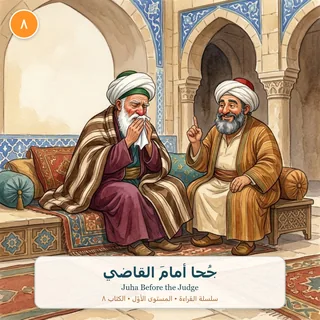 Book 8
Juha Before the Judge
جُحا أمامَ القاضي
Juha tells both men they are right — and then tells the judge he is right too.
-
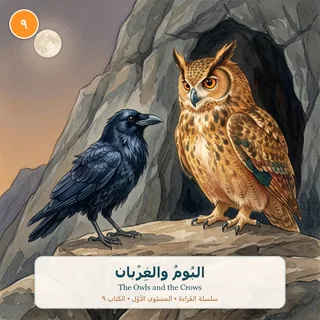 Book 9
The Owls and the Crows
البُومُ والغِرْبان
One old crow walks into the enemy's cave alone — with a plan.
-
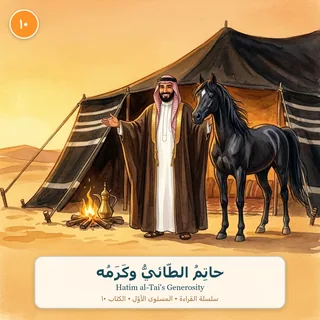 Book 10
Hatim al-Tai's Generosity
حاتِمُ الطّائيُّ وكَرَمُه
A king sends men to ask for Hatim's famous horse. Hatim has already served it for dinner.
-
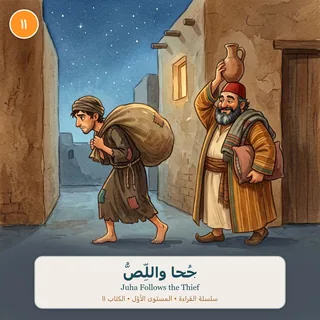 Book 11
Juha Follows the Thief
جُحا واللِّصُّ
A thief robs Juha's house at night — and Juha follows him home with the rest.
-
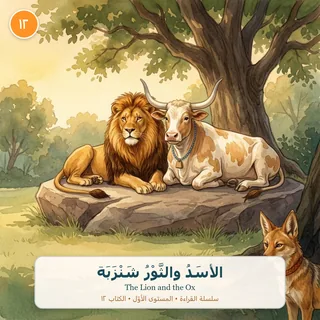 Book 12
The Lion and the Ox
الأسَدُ والثَّوْرُ شَنْزَبَة
A lion and an ox become true friends — until a jealous jackal starts whispering.
-
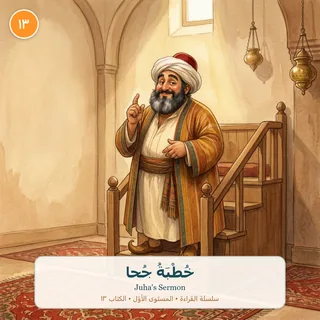 Book 13
Juha's Sermon
خُطْبَةُ جُحا
"Do you know what I'm going to say?" Juha's shortest talks ever.
-
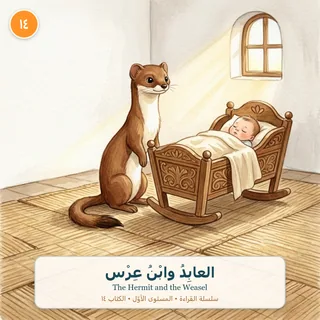 Book 14
The Hermit and the Weasel
العابِدُ وابْنُ عِرْس
A faithful weasel guards a baby — and one moment of haste changes everything.
-
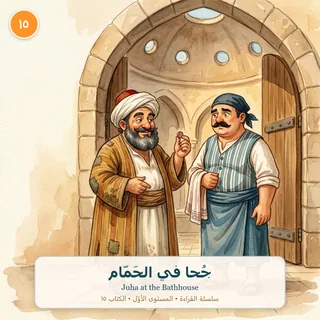 Book 15
Juha at the Bathhouse
جُحا في الحَمّام
Ignored in old clothes, Juha tips in gold. Treated like a prince, he tips a copper.
Making it stick when life is in another language
- Choose a fixed slot: bedtime, breakfast or the drive home.
- Keep it to ten minutes. A short daily habit lasts longer than a long weekend lesson.
- Ask the "For Parents" question at dinner.
- One account works on up to six devices, so the same library is on the tablet at home and the phone in the car.
Because the stories play on the site on any phone, tablet or computer, they travel with you. For more on listening, see Arabic audio stories for kids.
Common questions
I do not speak Arabic at all. Will this still work?
Yes. The narrator does the reading. Your part is to sit with your child, press play and talk about the story afterwards. The English "For Parents" page in each Juha book gives you the summary, a question and ten key words with pronunciation.
My child understands Arabic but answers in English. Where do we start?
Start with listening. Play the free Book 1 at bedtime for a week and let the child simply enjoy it. Many parents find that children begin repeating lines from a story they like, and that is a comfortable first step toward reading it.
What suits an older child or a teenager?
Arabic Readers Level 1. The tales are classics that do not feel childish, and each scene is given in Arabic and then in English. There is also a four-step practice for every scene: listen, read along, repeat, then read aloud.
Do we need to install an app?
No. Fanous opens in the web browser on any phone, tablet or computer, and you sign in with your email. If you like, you can add it to the home screen so it opens with one tap, like an app.