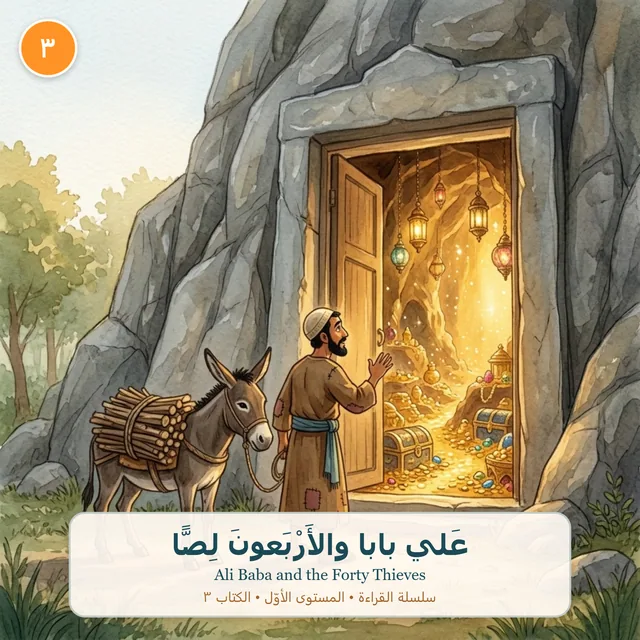
Arabic Readers Level 1 · Book 3
Ali Baba and the Forty Thieves
عَلي بابا والأَرْبَعونَ لِصًّا
A bilingual Arabic–English story for older children (about 10+), teens and adults learning Arabic: the reader hears each scene in Arabic while every word lights up, then reads it in English. This book is $3.99, or get all 15 books in the series for $34.99.
Last reviewed:
"Open, Sesame!" — two magic words, one greedy brother and a very clever servant.
- Series
- Arabic Readers Level 1, Book 3 of 15
- For
- Teens (12+) and adults
- Language
- Arabic (Modern Standard, full tashkeel), each scene followed by the same scene in English
- Length
- 6 short scenes · about 651 Arabic words
- Level
- Level 1 · about CEFR A2
- Read-aloud
- Yes — Arabic and English, every word highlighted as it is read
- Price
- $3.99
The story
A poor woodcutter hides in a tree and watches forty thieves open a rock with the words "Open, Sesame!" Ali Baba takes only a little gold, but his rich, greedy brother Qasim wants it all — and forgets the word inside the cave. When the robber chief comes looking for revenge, disguised as an oil merchant with forty jars, it is Ali Baba's servant Morgiana who hears a whisper in the dark. A simplified, gentler retelling of the most famous tale of the Nights.
The lesson: Greed blinds; courage and quick thinking protect a home.
Read the first scene
اِفْتَحْ يا سِمْسِمُ!
فِي مَدِينَةٍ قَدِيمَةٍ، عَاشَ أَخَوَانِ: قَاسِمٌ وَعَلِي بَابَا. كَانَ قَاسِمٌ غَنِيًّا، يَمْلِكُ دُكَّانًا كَبِيرًا فِي السُّوقِ. أَمَّا عَلِي بَابَا فَكَانَ حَطَّابًا فَقِيرًا. كَانَ يَذْهَبُ كُلَّ يَوْمٍ إِلَى الْغَابَةِ مَعَ حِمَارِهِ، وَيَجْمَعُ الْحَطَبَ، ثُمَّ يَبِيعُهُ فِي السُّوقِ.
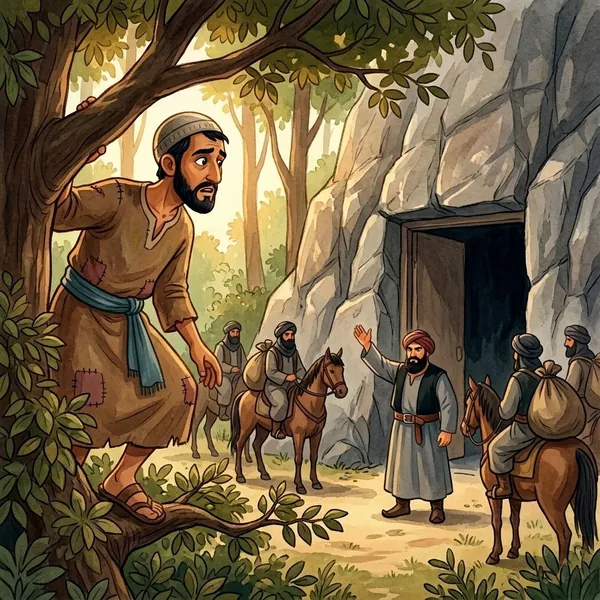
وَفِي يَوْمٍ مِنَ الْأَيَّامِ، كَانَ عَلِي بَابَا فِي الْغَابَةِ، فَسَمِعَ صَوْتَ خَيْلٍ كَثِيرَةٍ. خَافَ، فَرَبَطَ حِمَارَهُ بَيْنَ الْأَشْجَارِ، وَصَعِدَ إِلَى شَجَرَةٍ عَالِيَةٍ، وَاخْتَبَأَ بَيْنَ أَغْصَانِهَا.
جَاءَ أَرْبَعُونَ رَجُلًا عَلَى خُيُولِهِمْ، وَوَقَفُوا أَمَامَ صَخْرَةٍ كَبِيرَةٍ. كَانُوا لُصُوصًا، وَعَلَى ظُهُورِ الْخَيْلِ أَكْيَاسٌ ثَقِيلَةٌ.
تَقَدَّمَ رَئِيسُهُمْ إِلَى الصَّخْرَةِ، وَرَفَعَ صَوْتَهُ وَقَالَ: «افْتَحْ يَا سِمْسِمْ!». فَانْفَتَحَ فِي الصَّخْرَةِ بَابٌ كَبِيرٌ! دَخَلَ اللُّصُوصُ بِأَكْيَاسِهِمْ، ثُمَّ خَرَجُوا بَعْدَ قَلِيلٍ. قَالَ الرَّئِيسُ: «أَغْلِقْ يَا سِمْسِمْ!»، فَانْغَلَقَ الْبَابُ. ثُمَّ رَكِبُوا خُيُولَهُمْ وَذَهَبُوا.
Open, Sesame!
In an old city there lived two brothers, Qasim and Ali Baba. Qasim was rich and owned a big shop in the market. Ali Baba, though, was a poor woodcutter. Every day he went to the forest with his donkey, gathered firewood, and then sold it in the market.
One day, when Ali Baba was in the forest, he heard the sound of many horses. He was frightened, so he tied his donkey among the trees, climbed a tall tree, and hid among its branches.
Forty men rode up on their horses and stopped in front of a huge rock. They were thieves, and there were heavy sacks on their horses' backs.
Their chief stepped up to the rock, raised his voice and said, "Open, Sesame!" And a great door opened in the rock! The thieves went in with their sacks and came out a little later. The chief said, "Close, Sesame!" and the door closed. Then they mounted their horses and rode away.
Glossary
These words from the story are explained in the glossary at the back of the book.
| Arabic | Say it | Meaning |
|---|---|---|
| حَطّاب | ḥaṭṭāb | woodcutter |
| لِصّ – لُصُوص | liṣṣ – luṣūṣ | thief – thieves |
| مَغارَة | maghāra | cave |
| سِمْسِم | simsim | sesame |
| كَنْز | kanz | treasure |
| مِيزان | mīzān | pair of scales |
| شَمْع | shamʿ | wax |
| بَغْل – بِغال | baghl – bighāl | mule – mules |
| جَرَّة – جِرار | jarra – jirār | large jar – jars |
| زَيْت | zayt | oil |
| مِصْباح | miṣbāḥ | lamp |
| خادِمَة | khādima | servant (woman) |
| حارِس – حُرّاس | ḥāris – ḥurrās | guard – guards |
| سِرّ | sirr | secret |
| حُرّ – حُرَّة | ḥurr – ḥurra | free (not a servant) |
About this book
- A Level 1 reader for teens and adults learning Arabic — from complete beginners to those who understand Arabic but read it slowly.
- One complete classic tale in short scenes. Each scene comes twice: first in simple Modern Standard Arabic with full tashkeel, then the same scene in natural English.
- Both languages are read aloud with each word highlighted as it is spoken, on any phone, tablet or computer.
- A glossary with transliteration, and a note on where the tale comes from. Each book stands alone.