
Fanous · Arabic stories for children
Arabic bedtime stories for kids to listen to and read
For children aged 4 to 7: short Arabic bedtime stories your child listens to while each word lights up, then reads with you. Book 1, Juha, His Son, and the Donkey, is free.
Last reviewed:
A bedtime story has one job: to end the day calmly, in about ten minutes, with your child a little closer to Arabic than yesterday. That takes a story short enough to finish, gentle enough to sleep on, and written so a young child can follow every word.
What makes a good Arabic bedtime story
- Short. One complete tale in about ten minutes. Each Fanous picture book has 16 pages, with two to four short sentences on a page.
- Calm at the end. A smile and a small lesson, never a fright.
- Simple Modern Standard Arabic. The Arabic of books and school, understood in every Arab country.
- Every word fully vowelled. With the vowel marks on each word, a child sounds it out instead of guessing.
- Read aloud. A clear Arabic voice reads the page while each word lights up as it is spoken, so listening slowly turns into reading.
You do not need to read Arabic yourself. The narrator does the reading, and every picture book has an English "For Parents" page with the story in brief, a question to talk about and ten key words with pronunciation.
Start tonight with the free stories
Book 1 of each series is free once you sign in with an email. For a young child, begin with Juha, His Son, and the Donkey: a father, a boy, a donkey, and a road full of people with opinions. The second free book, Do You Believe the Donkey?, is a longer Arabic and English reader for an older brother or sister.
-
Free
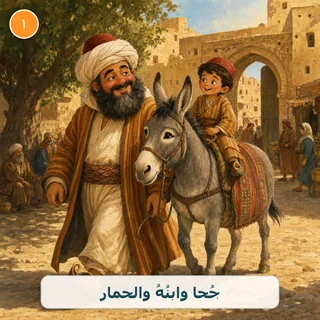 Book 1
Juha, His Son, and the Donkey
جُحا وابنُهُ والحمار
Juha and his son try every way to ride their donkey — and please no one.
-
Free
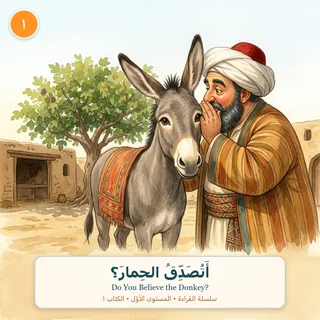 Book 1
Do You Believe the Donkey?
أَتُصَدِّقُ الحِمارَ؟
Juha tells his neighbour the donkey isn't home — and the donkey brays.
A ten-minute bedtime routine
- Listen. Tap play and let your child watch the words light up. The pages can turn by themselves when hands are sleepy.
- Tap a word. Choose one or two words on the page and tap them to hear them again. Say them together.
- Ask one question. "Was Juha right?" Then listen to the answer. No explaining needed.
- Give one sentence away. Let your child read the last line of the story alone.
- Repeat tomorrow. The same story for three or four nights does more than a new one every night.
Ten minutes a day keeps the day streak going, and many children enjoy protecting it. If the voice feels fast, slow it down a little.
28 bedtime stories from Juha's Tales
Juha's Tales is a series of 28 picture books for ages 4 to 7, one tale in each. Some seem made for the night itself. In Juha and the Moon in the Well, Juha tries to rescue the moon with a rope and a hook. In Juha Builds a Ladder to the Moon, a child's question ends with the moon shining in a bucket of water. In The Cloak That Flew into the River, a frightening shadow turns out to be the washing. The three "Bouquet of Juha's Tales" books each hold three very short anecdotes, handy for one small story a night.
-
Free
Book 1
Juha, His Son, and the Donkey
جُحا وابنُهُ والحمار
Juha and his son try every way to ride their donkey — and please no one.
-
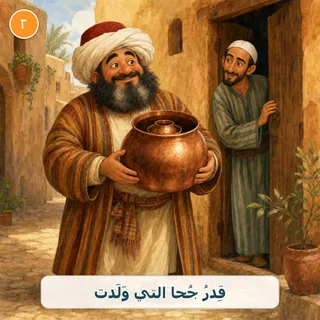 Book 2
Juha's Pot That Gave Birth
قِدرُ جُحا التي وَلَدت
The borrowed pot “gives birth” — so why can't it die? A witty lesson in fairness.
-
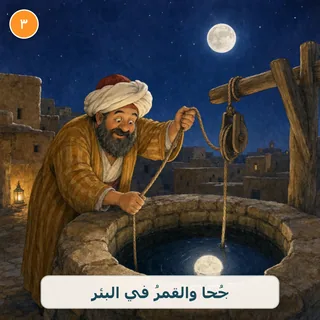 Book 3
Juha and the Moon in the Well
جُحا والقمرُ في البئر
Juha heroically “rescues” the moon from the well — and learns about reflections.
-
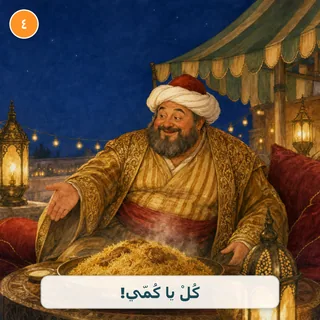 Book 4
Eat, O My Sleeve!
كُلْ يا كُمّي!
Snubbed in old clothes, honoured in a splendid robe — so Juha feeds the robe.
-
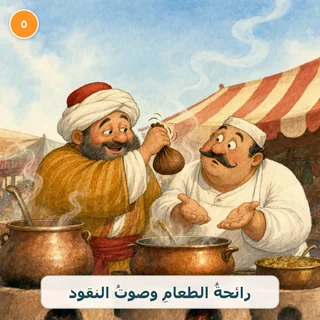 Book 5
The Smell of Food and the Sound of Coins
رائحةُ الطعامِ وصوتُ النقود
A cook charges for the smell of food; Juha pays him with the sound of coins.
-
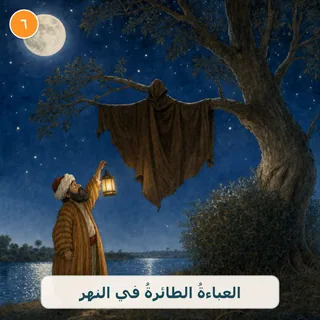 Book 6
The Cloak That Flew into the River
العباءةُ الطائرةُ في النهر
A “stranger” in the tree turns out to be Juha's own washed cloak — thank God he wasn't in it!
-
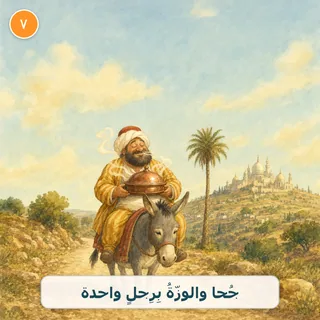 Book 7
Juha and the One-Legged Goose
جُحا والوزّةُ بِرِجلٍ واحدة
Juha eats one goose leg, then proves all geese have one leg — until the drums roll.
-
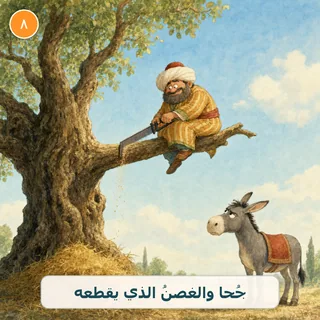 Book 8
Juha and the Branch He Was Cutting
جُحا والغصنُ الذي يقطعه
Sitting on the very branch he saws, Juha ignores good advice — once.
-
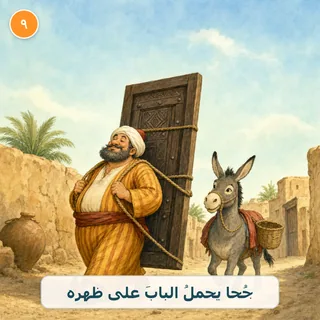 Book 9
Juha Carries the Door on His Back
جُحا يحملُ البابَ على ظهره
No door, no burglars? Juha takes home security very literally.
-
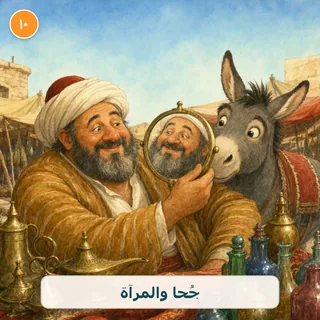 Book 10
Juha and the Mirror
جُحا والمرآة
One mirror, three different “portraits” — a warm family puzzle about seeing ourselves.
-
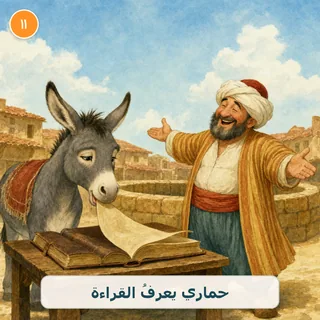 Book 11
My Donkey Can Read
حماري يعرفُ القراءة
With barley between the pages, Juha's donkey learns to “read” — and reviews the book out loud.
-
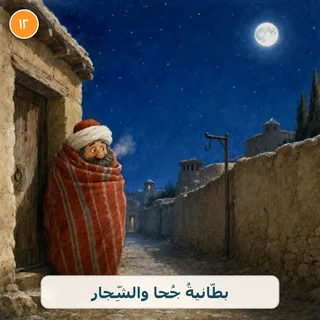 Book 12
Juha's Blanket and the Quarrel
بطّانيةُ جُحا والشِّجار
A midnight quarrel ends the moment Juha's blanket is snatched — so that's what it was about!
-
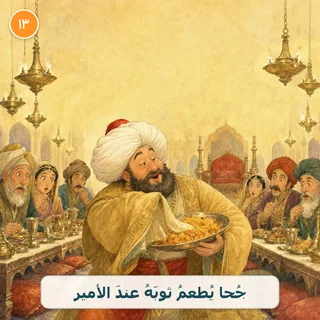 Book 13
Juha Feeds His Robe at the Prince's Palace
جُحا يُطعمُ ثوبَهُ عندَ الأمير
The sleeve-feeding lesson goes royal: Juha teaches the prince's court to honour minds, not garments.
-
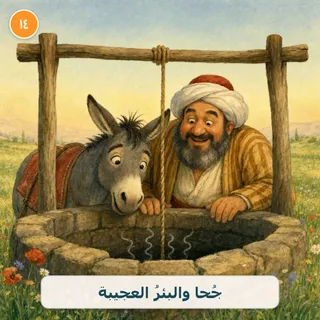 Book 14
Juha and the Wondrous Well
جُحا والبئرُ العجيبة
Who is the stubborn man at the bottom of the well? A playful first lesson in echoes — and kindness.
-
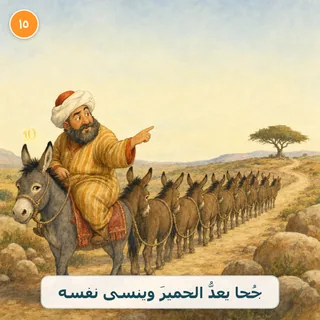 Book 15
Juha Counts the Donkeys and Forgets Himself
جُحا يعدُّ الحميرَ وينسى نفسه
Mounted, Juha counts nine donkeys; on foot, ten. His little son spots the missing one — right under him.
-
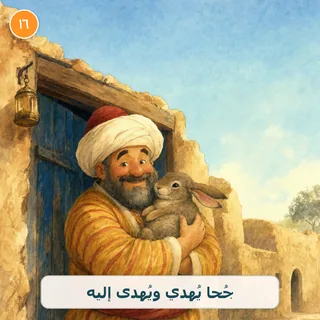 Book 16
Juha Gives and Receives Gifts
جُحا يُهدي ويُهدى إليه
“Neighbours of the friend of the man who brought the hare” get the water-of-the-water of its soup — then a real feast.
-
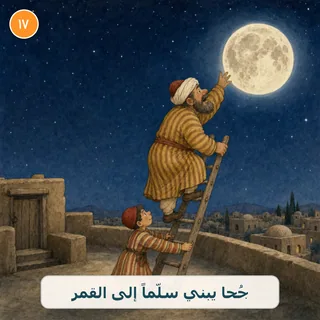 Book 17
Juha Builds a Ladder to the Moon
جُحا يبني سلّماً إلى القمر
When ladders can't reach the moon, Juha catches it in a bucket for his son. Pure wonder.
-
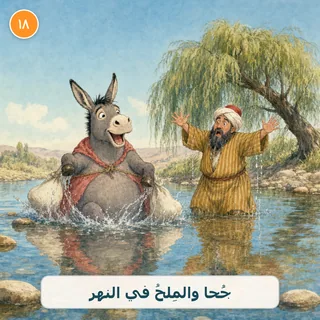 Book 18
Juha and the Salt in the River
جُحا والمِلحُ في النهر
The donkey's dissolving-salt trick meets Juha's counter-move: a load of cotton. Outsmarting, with love.
-
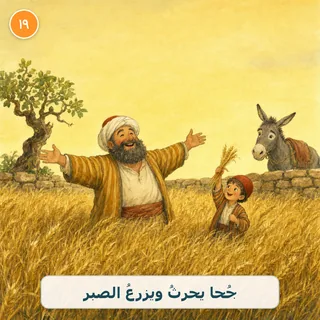 Book 19
Juha Plows and Plants Patience
جُحا يحرثُ ويزرعُ الصبر
From seed to the first hot loaf: they planted so we eat; we plant so others will.
-
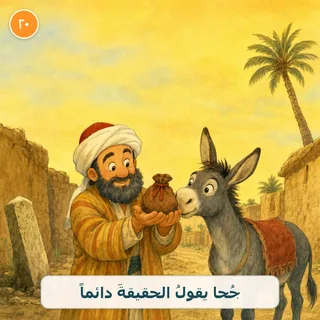 Book 20
Juha Always Tells the Truth
جُحا يقولُ الحقيقةَ دائماً
A hungry Juha returns a found purse untouched — and honesty becomes his shield in court.
-
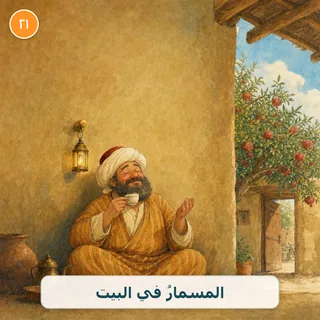 Book 21
The Nail in the House
المسمارُ في البيت
Juha sells the house but keeps one nail — and visiting rights. The proverb, warmly retold.
-
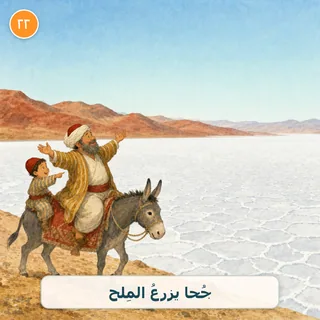 Book 22
Juha Plants the Salt
جُحا يزرعُ المِلح
Can you farm salt? Juha's grand experiment fails beautifully — then finds the real salt flats.
-
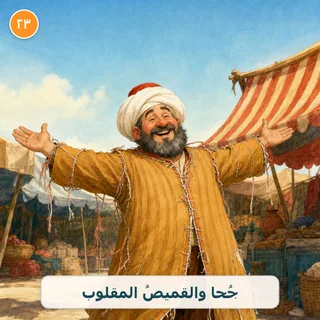 Book 23
Juha and the Inside-Out Robe
جُحا والقميصُ المقلوب
Robe inside-out, market laughing — until Juha declares it his robe's birthday. Laughing at yourself wins.
-
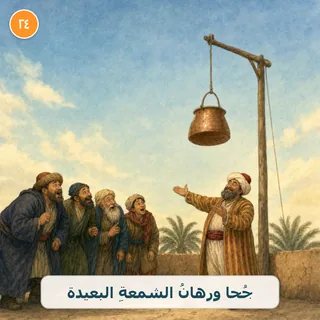 Book 24
Juha and the Bet of the Distant Candle
جُحا ورهانُ الشمعةِ البعيدة
If a candle on a far mountain can warm a man, Juha's tiny candle can cook a hanging pot. Checkmate.
-
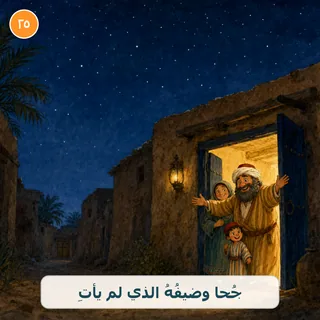 Book 25
Juha and the Guest Who Never Came
جُحا وضيفُهُ الذي لم يأتِ
The guest never comes — so the whole neighbourhood does. Generosity always finds a way.
-
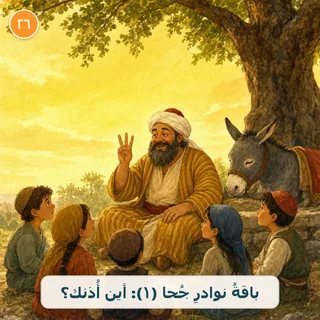 Book 26
A Bouquet of Juha's Tales (1): Where Is Your Ear?
باقةُ نوادرِ جُحا (١): أين أُذنك؟
Three mini-tales: the long way to your ear, thank-God-for-figs, and forever forty.
-
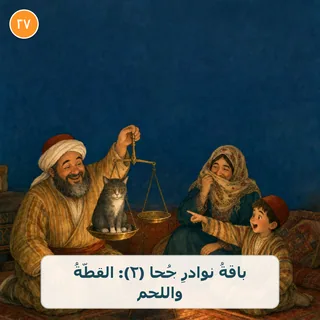 Book 27
A Bouquet of Juha's Tales (2): The Cat and the Meat
باقةُ نوادرِ جُحا (٢): القطّةُ واللحم
Home tales: weighing the cat, one mouth blowing hot and cold, and searching where the light is.
-
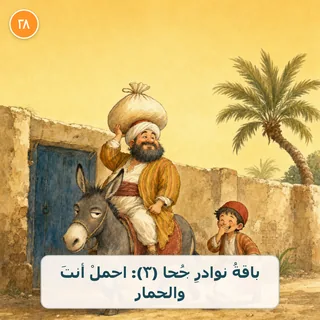 Book 28
A Bouquet of Juha's Tales (3): Carry It, You and the Donkey
باقةُ نوادرِ جُحا (٣): احملْ أنتَ والحمار
Donkey tales: the flour sack on the rider's head, gratitude for a lost donkey, and who rides, who walks.
Not sure which book fits your child? See Arabic stories by age, or choose by theme in stories with a lesson.
Common questions
How long is each bedtime story?
Each of Juha's Tales has 16 pages and about 330 to 440 Arabic words, with two to four short sentences on a page. Listening to the whole book takes roughly ten minutes, which suits the last quiet moment before sleep.
What age are these Arabic bedtime stories for?
Juha's Tales are written for children aged 4 to 7. Younger children often enjoy listening along with the pictures, and a confident older reader can read the longer level-three books alone. For children of about ten and up there is a separate series, Arabic Readers Level 1.
I don't read Arabic. Can we still have bedtime stories in Arabic?
Yes. The narrator reads every page aloud while each word lights up, so you and your child follow together. Each picture book also has an English page for parents with the story in brief, a question to discuss and ten key words with their pronunciation.
Do we need to install an app?
No. The stories open in the web browser on any phone, tablet or computer, and you can add Fanous to the home screen so it opens like an app. One account works on up to six devices, so the whole family shares one library.
Is the Arabic a dialect or Modern Standard Arabic?
Simple Modern Standard Arabic, the Arabic of books and school that is understood across the Arab world. Every word carries its vowel marks, so your child hears and sees exactly how it is pronounced, whatever dialect is spoken at home.