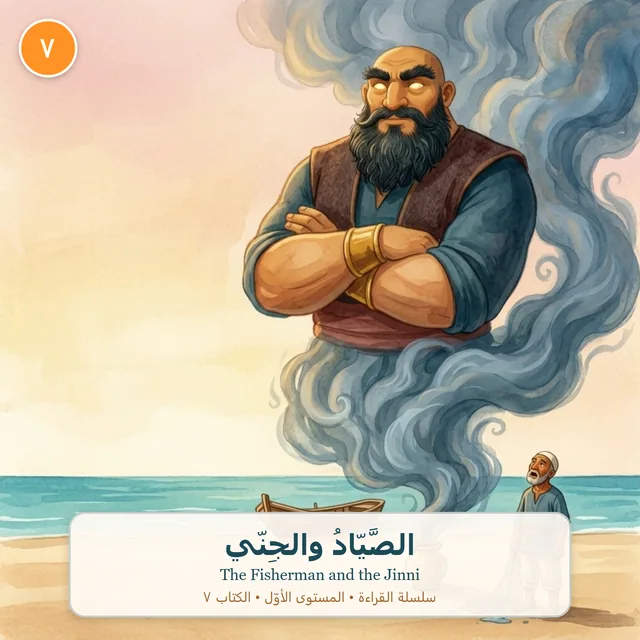
Arabic Readers Level 1 · Book 7
The Fisherman and the Jinni
الصَّيّادُ والجِنّي
A bilingual Arabic–English story for older children (about 10+), teens and adults learning Arabic: the reader hears each scene in Arabic while every word lights up, then reads it in English. This book is $3.99, or get all 15 books in the series for $34.99.
Last reviewed:
A poor fisherman opens a sealed brass jar — and a furious giant rises out of it.
- Series
- Arabic Readers Level 1, Book 7 of 15
- For
- Teens (12+) and adults
- Language
- Arabic (Modern Standard, full tashkeel), each scene followed by the same scene in English
- Length
- 6 short scenes · about 659 Arabic words
- Level
- Level 1 · about CEFR A2
- Read-aloud
- Yes — Arabic and English, every word highlighted as it is read
- Price
- $3.99
The story
A poor old fisherman casts his net four times a day. On the fourth cast he pulls up a heavy brass jar sealed with lead. When he opens it, smoke pours out and becomes an enormous jinni, who swears he will kill the man who freed him. The fisherman has no strength, no weapon and nowhere to run. He has only one question: "How could someone as big as you ever fit in a jar this small?"
The lesson: Wit is stronger than strength.
Read the first scene
الصَّيّادُ الفَقيرُ
كَانَ فِي مَدِينَةٍ عَلَى شَاطِئِ الْبَحْرِ صَيَّادٌ فَقِيرٌ، كَبِيرٌ فِي السِّنِّ. كَانَ عِنْدَهُ زَوْجَةٌ وَثَلَاثَةُ أَوْلَادٍ، وَلَا يَمْلِكُ شَيْئًا إِلَّا شَبَكَتَهُ الْقَدِيمَةَ.
وَكَانَتْ لَهُ عَادَةٌ لَا يَتْرُكُهَا: يَخْرُجُ إِلَى الْبَحْرِ كُلَّ يَوْمٍ قَبْلَ شُرُوقِ الشَّمْسِ، وَيَرْمِي شَبَكَتَهُ أَرْبَعَ مَرَّاتٍ فَقَطْ، لَا أَكْثَرَ. ثُمَّ يَرْجِعُ إِلَى أَهْلِهِ بِمَا رَزَقَهُ اللهُ، قَلِيلًا كَانَ أَوْ كَثِيرًا.
وَفِي صَبَاحِ يَوْمٍ مِنَ الْأَيَّامِ، خَرَجَ كَعَادَتِهِ. كَانَ الْبَحْرُ هَادِئًا، وَالسَّمَاءُ صَافِيَةً، وَالشَّاطِئُ فَارِغًا. وَقَفَ عَلَى الرَّمْلِ، وَرَفَعَ يَدَيْهِ وَقَالَ: «يَا رَبِّ، ارْزُقْنِي الْيَوْمَ رِزْقًا طَيِّبًا، فَأَوْلَادِي جَائِعُونَ».
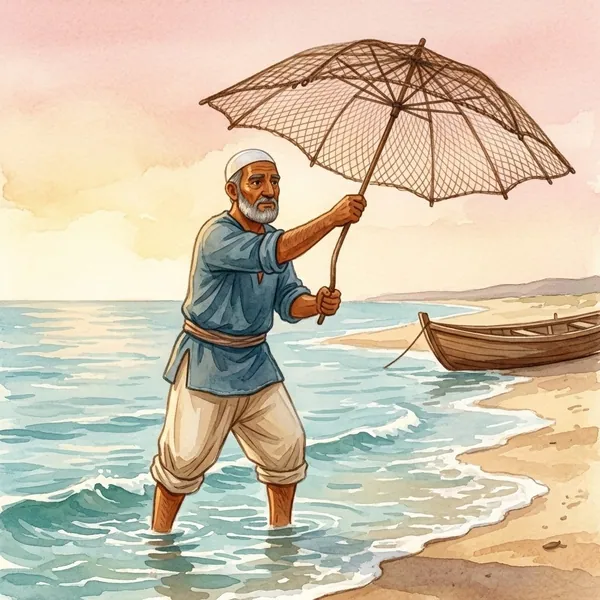
ثُمَّ رَفَعَ طَرَفَ ثَوْبِهِ، وَدَخَلَ الْمَاءَ إِلَى رُكْبَتَيْهِ. وَرَمَى شَبَكَتَهُ الْأُولَى بِكُلِّ قُوَّتِهِ، فَانْفَتَحَتْ فَوْقَ الْمَاءِ كَالْمِظَلَّةِ، ثُمَّ غَاصَتْ بِبُطْءٍ. وَوَقَفَ يَنْتَظِرُ، وَالْأَمْوَاجُ الصَّغِيرَةُ تَلْمِسُ رِجْلَيْهِ.
The Poor Fisherman
In a city on the seashore there lived a poor fisherman who was getting old. He had a wife and three children, and he owned nothing but his old net.
He had a habit he never broke: every day he went out to the sea before sunrise and cast his net four times only, no more. Then he went home to his family with whatever God had provided, whether little or much.
One morning he went out as usual. The sea was calm, the sky was clear, and the shore was empty. He stood on the sand, raised his hands and said, "O Lord, provide for me well today, for my children are hungry."
Then he lifted the hem of his robe and waded into the water up to his knees. He cast his first net with all his strength; it spread over the water like an umbrella and then slowly sank. And he stood waiting, the little waves touching his legs.
Glossary
These words from the story are explained in the glossary at the back of the book.
| Arabic | Say it | Meaning |
|---|---|---|
| صَيّاد | ṣayyād | fisherman (also: hunter) |
| رَزَقَ – يَرْزُقُ | razaqa – yarzuqu | to provide (said of God) |
| جَرَّة | jarra | large jar |
| نُحاس | nuḥās | copper, brass |
| رَصاص | raṣāṣ | lead (the metal) |
| خاتَم | khātam | seal, signet ring |
| دُخان | dukhān | smoke |
| جِنِّيّ | jinnī | jinni, genie |
| أَبْشِرْ | abshir | Good news for you! (rejoice) |
| حَبَسَ – يَحْبِسُ | ḥabasa – yaḥbisu | to imprison, shut in |
| أَقْسَمَ – يُقْسِمُ | aqsama – yuqsimu | to swear (an oath) |
| وَعْد | waʿd | promise |
| جَزاء | jazāʾ | reward, what one deserves |
| بُحَيْرَة | buḥayra | lake |
| سُلْطان | sulṭān | sultan, ruler |
About this book
- A Level 1 reader for teens and adults learning Arabic — from complete beginners to those who understand Arabic but read it slowly.
- One complete classic tale in short scenes. Each scene comes twice: first in simple Modern Standard Arabic with full tashkeel, then the same scene in natural English.
- Both languages are read aloud with each word highlighted as it is spoken, on any phone, tablet or computer.
- A glossary with transliteration, and a note on where the tale comes from. Each book stands alone.