Arabic Readers Level 1 · Book 6
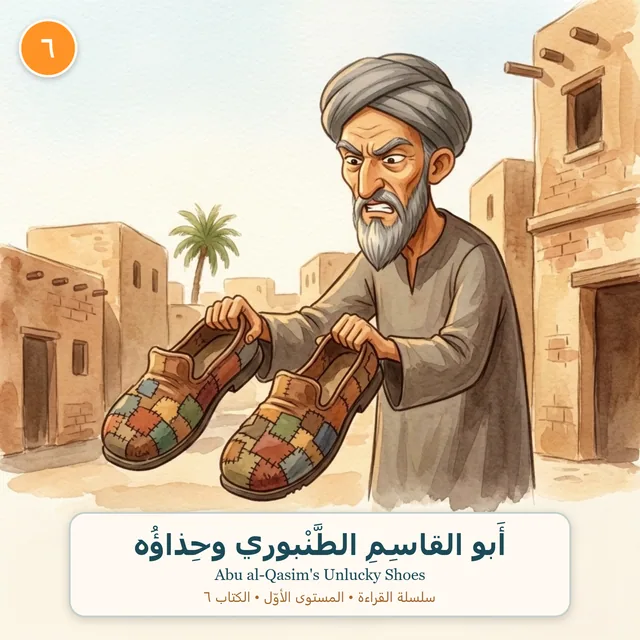
Abu al-Qasim's Unlucky Shoes
أَبو القاسِمِ الطَّنْبوري وحِذاؤُه
A bilingual Arabic–English story for older children (about 10+), teens and adults learning Arabic: the reader hears each scene in Arabic while every word lights up, then reads it in English. This book is $3.99, or get all 15 books in the series for $34.99.
Last reviewed:
A stingy man tries to get rid of his old shoes — and they keep coming back.
- Series
- Arabic Readers Level 1, Book 6 of 15
- For
- Teens (12+) and adults
- Language
- Arabic (Modern Standard, full tashkeel), each scene followed by the same scene in English
- Length
- 6 short scenes · about 641 Arabic words
- Level
- Level 1 · about CEFR A2
- Read-aloud
- Yes — Arabic and English, every word highlighted as it is read
- Price
- $3.99
The story
Abu al-Qasim of Baghdad is rich but so stingy that he has patched his ugly old shoes for years. When he finally tries to get rid of them, the shoes seem to fight back: from the public bath to the river, from a fisherman's net to a neighbour's window, every attempt ends with a fine. At last he goes to the judge with a very strange request. One of the funniest tales in Arabic literature.
The lesson: Stinginess costs more in the end than generosity.
Read the first scene
حِذاءٌ لا يَموتُ
كَانَ فِي بَغْدَادَ تَاجِرٌ اسْمُهُ أَبُو الْقَاسِمِ الطُّنْبُورِيُّ. كَانَ غَنِيًّا جِدًّا، لَكِنَّهُ كَانَ أَبْخَلَ النَّاسِ. لَا يَشْتَرِي ثَوْبًا جَدِيدًا، وَلَا يَطْبُخُ لَحْمًا إِلَّا فِي الْعِيدِ.
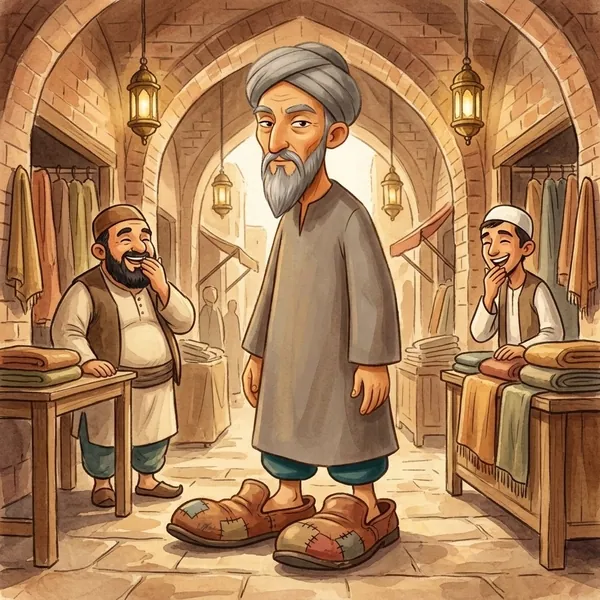
وَكَانَ عِنْدَهُ حِذَاءٌ قَدِيمٌ، يَلْبَسُهُ مُنْذُ سَنَوَاتٍ طَوِيلَةٍ. كُلَّمَا انْقَطَعَ مِنْهُ جُزْءٌ، أَخَذَهُ إِلَى مُصْلِحِ الْأَحْذِيَةِ، فَوَضَعَ عَلَيْهِ رُقْعَةً جَدِيدَةً. وَكَثُرَتِ الرُّقَعُ، حَتَّى صَارَ الْحِذَاءُ ثَقِيلًا كَبِيرًا، لَهُ أَلْوَانٌ كَثِيرَةٌ، وَلَا يُشْبِهُ أَيَّ حِذَاءٍ فِي الْمَدِينَةِ.
وَكَانَ يَمْشِي فِي السُّوقِ وَهُوَ يَجُرُّ حِذَاءَهُ عَلَى الْأَرْضِ، فَيَسْمَعُ النَّاسُ صَوْتَهُ مِنْ بَعِيدٍ: طَقْ، طَقْ، طَقْ.
كَانَ النَّاسُ يَضْحَكُونَ حِينَ يَرَوْنَهُ. وَيَقُولُ بَعْضُهُمْ لِبَعْضٍ: «انْظُرُوا! جَاءَ حِذَاءُ أَبِي الْقَاسِمِ، وَأَبُو الْقَاسِمِ وَرَاءَهُ!».
لَكِنَّ أَبَا الْقَاسِمِ لَمْ يَهْتَمَّ. كَانَ يَقُولُ: «حِذَاءٌ قَدِيمٌ خَيْرٌ مِنْ مَالٍ يَضِيعُ».
Shoes That Never Die
In Baghdad there lived a merchant named Abu al-Qasim al-Tanburi. He was very rich, but he was the stingiest man alive. He never bought a new robe, and he cooked meat only on feast days.
He had a pair of old shoes that he had worn for many years. Whenever a piece of them wore through, he took them to the shoemaker, who sewed on a new patch. The patches grew and grew, until the shoes became heavy and huge, full of different colours, and unlike any shoes in the city.
He walked through the market dragging his shoes on the ground, and people heard them coming from far away: clack, clack, clack.
People laughed when they saw him. They said to one another, "Look! Here come Abu al-Qasim's shoes — and Abu al-Qasim behind them!"
But Abu al-Qasim did not care. He used to say, "Old shoes are better than wasted money."
Glossary
These words from the story are explained in the glossary at the back of the book.
| Arabic | Say it | Meaning |
|---|---|---|
| بَخِيل | bakhīl | stingy, a miser |
| حِذاء | ḥidhāʾ | shoe, pair of shoes |
| رُقْعَة – رُقَع | ruqʿa – ruqaʿ | patch – patches |
| مُصْلِحُ الأَحْذِيَة | muṣliḥ al-aḥdhiya | shoe repairer |
| حَمّام | ḥammām | public bathhouse |
| قاضٍ – القاضي | qāḍin – al-qāḍī | judge |
| غَرامَة | gharāma | fine (money paid as punishment) |
| زُجاجَة – زُجاجات | zujāja – zujājāt | bottle – bottles |
| ماءُ الوَرْد | māʾ al-ward | rose water |
| حَفَرَ – يَحْفِرُ | ḥafara – yaḥfiru | to dig |
| دَفَنَ – يَدْفِنُ | dafana – yadfinu | to bury |
| حاكِم | ḥākim | governor, ruler |
| سَطْح | saṭḥ | flat roof |
| جَفَّ – يَجِفُّ | jaffa – yajiffu | to dry, become dry |
| تَخَلَّصَ مِنْ | takhallaṣa min | to get rid of |
About this book
- A Level 1 reader for teens and adults learning Arabic — from complete beginners to those who understand Arabic but read it slowly.
- One complete classic tale in short scenes. Each scene comes twice: first in simple Modern Standard Arabic with full tashkeel, then the same scene in natural English.
- Both languages are read aloud with each word highlighted as it is spoken, on any phone, tablet or computer.
- A glossary with transliteration, and a note on where the tale comes from. Each book stands alone.