Arabic Readers Level 1 · Book 8
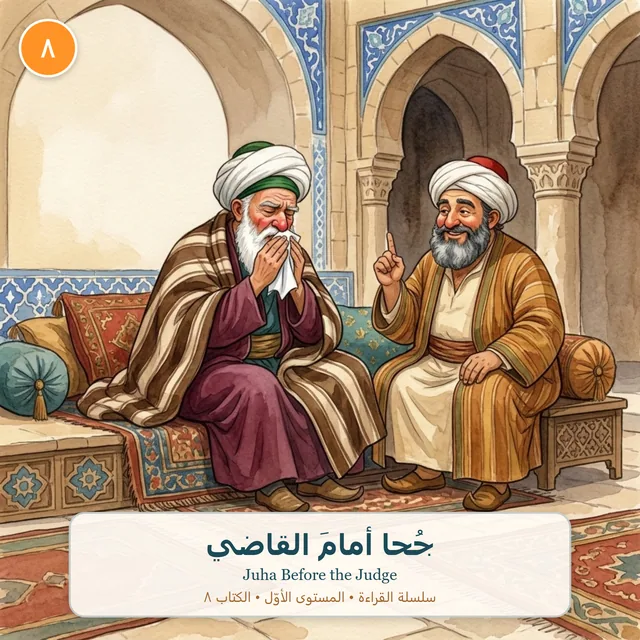
Juha Before the Judge
جُحا أمامَ القاضي
A bilingual Arabic–English story for older children (about 10+), teens and adults learning Arabic: the reader hears each scene in Arabic while every word lights up, then reads it in English. This book is $3.99, or get all 15 books in the series for $34.99.
Last reviewed:
Juha tells both men they are right — and then tells the judge he is right too.
- Series
- Arabic Readers Level 1, Book 8 of 15
- For
- Teens (12+) and adults
- Language
- Arabic (Modern Standard, full tashkeel), each scene followed by the same scene in English
- Length
- 6 short scenes · about 641 Arabic words
- Level
- Level 1 · about CEFR A2
- Read-aloud
- Yes — Arabic and English, every word highlighted as it is read
- Price
- $3.99
The story
The old town judge has a bad cold, so he asks Juha to sit beside him and help with the day's cases. A farmer complains that his neighbour's donkey ate his vegetables; Juha listens and says, "You are right." The donkey's owner says the farmer left his gate open; Juha says, "You are right." The judge protests that they cannot both be right — and Juha gives the famous answer. Then he finds a way to make everyone happy.
The lesson: Most quarrels have some truth on both sides.
Read the first scene
القاضي مَريضٌ
فِي صَبَاحِ يَوْمٍ بَارِدٍ، مَرَّ جُحَا بِالْمَحْكَمَةِ. سَمِعَ مِنَ الدَّاخِلِ صَوْتَ عَطْسَةٍ قَوِيَّةٍ: «أَتْشِي! أَتْشِي!». فَدَخَلَ يُسَلِّمُ عَلَيْهِ.
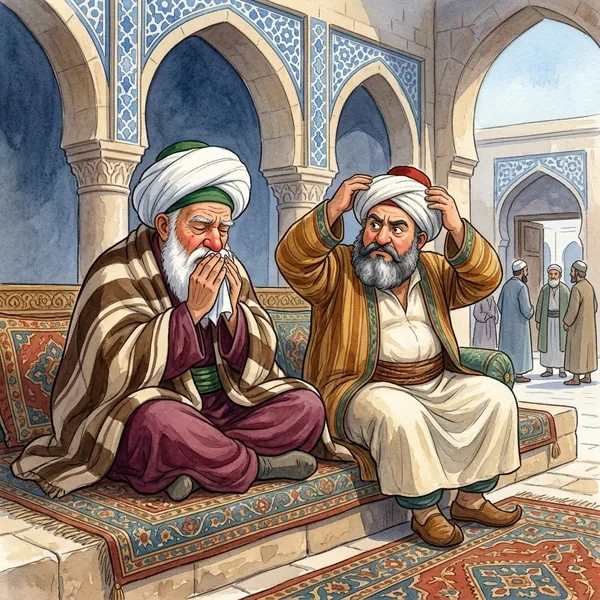
وَجَدَ الْقَاضِيَ جَالِسًا عَلَى وِسَادَتِهِ فِي سَاحَةِ الْمَحْكَمَةِ، مَلْفُوفًا بِبَطَّانِيَةٍ، وَأَنْفُهُ أَحْمَرُ. وَكَانَ النَّاسُ يَنْتَظِرُونَ عِنْدَ الْبَابِ، وَكُلُّ وَاحِدٍ مِنْهُمْ عِنْدَهُ شَكْوَى.
قَالَ الْقَاضِي بِصَوْتٍ ضَعِيفٍ: «أَهْلًا يَا جُحَا. أَنَا مَرِيضٌ الْيَوْمَ، وَرَأْسِي ثَقِيلٌ، وَلَا أَسْتَطِيعُ أَنْ أُفَكِّرَ. اجْلِسْ بِجَانِبِي، وَاسْمَعِ النَّاسَ مَعِي. وَإِذَا تَعِبْتُ، فَاحْكُمْ أَنْتَ بَدَلًا مِنِّي».
ضَحِكَ جُحَا وَقَالَ: «أَنَا قَاضٍ؟ يَا سَيِّدِي، أَنَا لَا أَعْرِفُ إِلَّا الْحَمِيرَ وَالْحِكَايَاتِ الْمُضْحِكَةَ!».
قَالَ الْقَاضِي: «وَالْحِكَايَاتُ الْمُضْحِكَةُ تَحْتَاجُ إِلَى عَقْلٍ. اجْلِسْ». فَجَلَسَ جُحَا بِجَانِبِهِ عَلَى الْوِسَادَةِ، وَأَصْلَحَ عِمَامَتَهُ، وَنَظَرَ إِلَى النَّاسِ بِوَجْهٍ جَادٍّ جِدًّا، كَأَنَّهُ قَاضٍ مُنْذُ عِشْرِينَ سَنَةً.
The Judge Has a Cold
One cold morning, Juha passed by the court. From inside he heard a loud sneeze: "Achoo! Achoo!" So he went in to greet him.
He found the judge sitting on his cushion in the courtyard of the court, wrapped in a blanket, with a red nose. People were waiting at the gate, and every one of them had a complaint.
The judge said in a weak voice, "Welcome, Juha. I'm ill today, my head is heavy, and I can't think. Sit beside me and listen to the people with me. And if I get tired, you judge in my place."
Juha laughed and said, "Me, a judge? Sir, all I know about is donkeys and funny stories!"
The judge said, "And funny stories need a good mind. Sit down." So Juha sat down on the cushion beside him, straightened his turban and looked at the people with a very serious face, as if he had been a judge for twenty years.
Glossary
These words from the story are explained in the glossary at the back of the book.
| Arabic | Say it | Meaning |
|---|---|---|
| قاضٍ – القاضي | qāḍin – al-qāḍī | judge |
| مَحْكَمَة | maḥkama | court |
| عَطَسَ – يَعْطِسُ | ʿaṭasa – yaʿṭisu | to sneeze |
| بَطّانِيَّة | baṭṭāniyya | blanket |
| مُزارِع | muzāriʿ | farmer |
| مَلْفُوف | malfūf | cabbage |
| جَزَر | jazar | carrots |
| شَكْوى | shakwā | complaint |
| ذَنْب | dhanb | fault, guilt |
| قَضِيَّة | qaḍiyya | (legal) case |
| ضَرَر | ḍarar | damage, harm |
| حُكْم | ḥukm | ruling, judgement |
| عَدْل | ʿadl | justice, fairness |
| راضٍ | rāḍin | satisfied, content |
| مَعَكَ حَقّ | maʿaka ḥaqq | you are right |
About this book
- A Level 1 reader for teens and adults learning Arabic — from complete beginners to those who understand Arabic but read it slowly.
- One complete classic tale in short scenes. Each scene comes twice: first in simple Modern Standard Arabic with full tashkeel, then the same scene in natural English.
- Both languages are read aloud with each word highlighted as it is spoken, on any phone, tablet or computer.
- A glossary with transliteration, and a note on where the tale comes from. Each book stands alone.