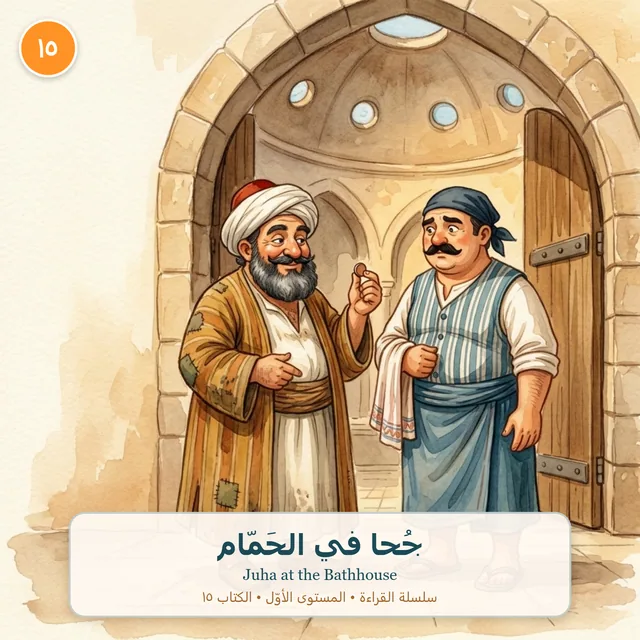
Arabic Readers Level 1 · Book 15
Juha at the Bathhouse
جُحا في الحَمّام
A bilingual Arabic–English story for older children (about 10+), teens and adults learning Arabic: the reader hears each scene in Arabic while every word lights up, then reads it in English. This book is $3.99, or get all 15 books in the series for $34.99.
Last reviewed:
Ignored in old clothes, Juha tips in gold. Treated like a prince, he tips a copper.
- Series
- Arabic Readers Level 1, Book 15 of 15
- For
- Teens (12+) and adults
- Language
- Arabic (Modern Standard, full tashkeel), each scene followed by the same scene in English
- Length
- 6 short scenes · about 649 Arabic words
- Level
- Level 1 · about CEFR A2
- Read-aloud
- Yes — Arabic and English, every word highlighted as it is read
- Price
- $3.99
The story
Juha goes to the town bathhouse in his old working robe, and the attendants hardly look at him: a thin towel, cold water, no soap. Yet when he leaves, he gives each of them a gold coin. The next week the same attendants treat him like a prince — the best towels, rose water, fresh fruit. And when he leaves, he gives them one tiny copper coin. His explanation is perfect.
The lesson: Treat people well for who they are, not for what they wear or what they pay.
Read the first scene
ثَوْبُ العَمَلِ
فِي يَوْمٍ حَارٍّ، كَانَ جُحَا يَعْمَلُ فِي بُسْتَانِهِ مِنَ الصَّبَاحِ. حَمَلَ الْحَطَبَ، وَسَقَى الشَّجَرَ، وَحَفَرَ الْأَرْضَ، حَتَّى امْتَلَأَ ثَوْبُهُ بِالتُّرَابِ وَالْعَرَقِ.
وَفِي الْعَصْرِ، قَالَ لِنَفْسِهِ: «أَنَا مُتْعَبٌ وَوَسِخٌ. سَأَذْهَبُ إِلَى الْحَمَّامِ، وَأَغْتَسِلُ بِالْمَاءِ السَّاخِنِ، وَأَرْتَاحُ».
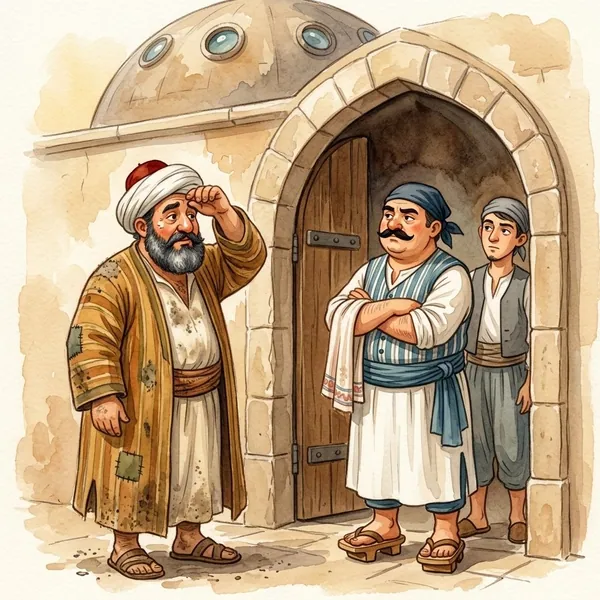
لَمْ يَرْجِعْ إِلَى الْبَيْتِ لِيُغَيِّرَ ثِيَابَهُ. ذَهَبَ إِلَى الْحَمَّامِ كَمَا هُوَ: بِثَوْبِ الْعَمَلِ الْقَدِيمِ الْمُرَقَّعِ، وَعِمَامَةٍ مَائِلَةٍ، وَحِذَاءٍ عَلَيْهِ الْغُبَارُ. وَكَانَ فِي جَيْبِهِ كِيسٌ صَغِيرٌ، لَا يَعْرِفُ أَحَدٌ مَا فِيهِ.
وَكَانَ حَمَّامُ الْبَلْدَةِ بِنَاءً قَدِيمًا جَمِيلًا، لَهُ قُبَّةٌ كَبِيرَةٌ، فِيهَا نَوَافِذُ صَغِيرَةٌ مُسْتَدِيرَةٌ يَدْخُلُ مِنْهَا الضَّوْءُ. وَكَانَ الْعُمَّالُ يَقِفُونَ عِنْدَ الْبَابِ، يَسْتَقْبِلُونَ الزَّبَائِنَ.
نَظَرَ الْعُمَّالُ إِلَى جُحَا مِنْ رَأْسِهِ إِلَى قَدَمَيْهِ. ثُمَّ نَظَرَ بَعْضُهُمْ إِلَى بَعْضٍ، وَقَالَ رَئِيسُهُمْ بِصَوْتٍ مُنْخَفِضٍ: «هَذَا رَجُلٌ فَقِيرٌ. لَنْ نَرْبَحَ مِنْهُ شَيْئًا».
The Work Robe
On a hot day, Juha had been working in his orchard since morning. He carried firewood, watered the trees and dug the ground, until his robe was full of dirt and sweat.
In the afternoon he said to himself, "I'm tired and dirty. I'll go to the bathhouse, wash in hot water and rest."
He didn't go home to change. He went to the bathhouse just as he was: in his old patched work robe, his turban crooked and his sandals covered in dust. In his pocket was a small purse, and nobody knew what was in it.
The town bathhouse was a beautiful old building with a large dome, pierced with small round windows that let in the light. The attendants stood at the door, welcoming the customers.
The attendants looked Juha up and down. Then they looked at one another, and their chief said quietly, "This man is poor. We won't earn anything from him."
Glossary
These words from the story are explained in the glossary at the back of the book.
| Arabic | Say it | Meaning |
|---|---|---|
| حَمّام | ḥammām | public bathhouse |
| قُبَّة | qubba | dome |
| عامِل – عُمّال | ʿāmil – ʿummāl | worker – workers, attendants |
| زَبُون – زَبائِن | zabūn – zabāʾin | customer – customers |
| مُرَقَّع | muraqqaʿ | patched |
| مِنْشَفَة – مَناشِف | minshafa – manāshif | towel – towels |
| ثُقْب – ثُقُوب | thuqb – thuqūb | hole – holes |
| صابُون | ṣābūn | soap |
| فاتِر | fātir | lukewarm |
| مُعَطَّر | muʿaṭṭar | perfumed |
| أُجْرَة | ujra | wage, pay |
| دَلَّكَ – يُدَلِّكُ | dallaka – yudalliku | to massage |
| نُحاس | nuḥās | copper |
| مُقَدَّمًا | muqaddaman | in advance |
| حِساب | ḥisāb | account, calculation |
About this book
- A Level 1 reader for teens and adults learning Arabic — from complete beginners to those who understand Arabic but read it slowly.
- One complete classic tale in short scenes. Each scene comes twice: first in simple Modern Standard Arabic with full tashkeel, then the same scene in natural English.
- Both languages are read aloud with each word highlighted as it is spoken, on any phone, tablet or computer.
- A glossary with transliteration, and a note on where the tale comes from. Each book stands alone.